In the traditional B2B sales playbook, the strategy was simple: find the "Lead," nurture them, and close the deal. But the world of business-to-business commerce has shifted fundamentally. Today, you aren’t selling to a person; you are selling to a Buying Group.
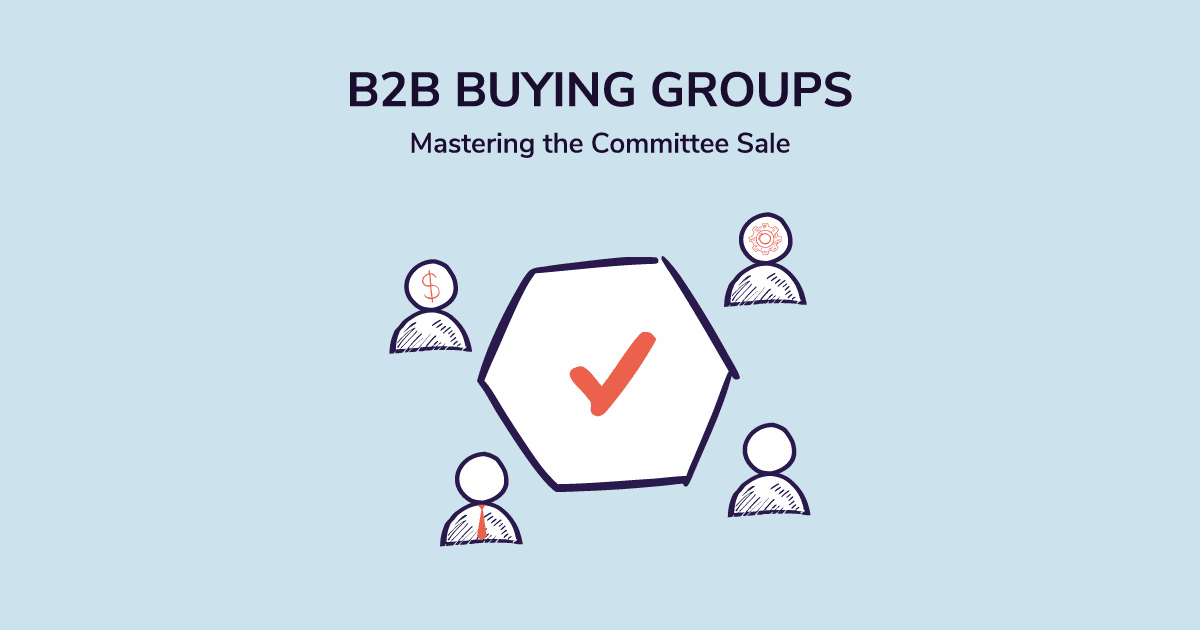
A Buying Group (also known as a buying committee) is a cross-functional team of stakeholders who collectively research, evaluate, and approve a purchase. If you are still focusing on individual leads, you are likely leaving 80% of your potential revenue on the table.
This guide is your definitive resource for understanding, identifying, and winning over the B2B buying group. We will move beyond the basics to explore the complex psychology of group consensus, the technical requirements of lead-to-account matching, and the strategic implementation of Buying Group Marketing.
Part 1: The Death of the MQL and the Rise of the Buying Group
For decades, the Marketing Qualified Lead (MQL) was the "North Star" of B2B marketing. If someone downloaded a whitepaper, they were an MQL. Marketing handed them to Sales, and Sales made the call.
Why the Lead-Based Model is Broken
From what I have seen working closely with B2B growth teams, treating people as isolated leads creates three major problems:
- The Context Gap: If three people from the same company download your guide, but your system treats them as three separate leads, you miss the "big picture." You don't realize that the company is actually in a deep research phase.
- The Poor Buyer Experience: Imagine the IT Director and the CFO of the same company both getting generic "Intro to our Product" emails on the same day. It makes your brand look disorganized and uninformed.
- Lead Leakage: When you focus on one lead, and that person leaves the company or gets busy, the deal dies. In a Buying Group motion, the deal lives as long as the group is engaged.
The New North Star: The MQBG
Modern organizations are moving toward the Marketing Qualified Buying Group (MQBG). Instead of measuring individual interest, you measure the collective intent of an account. When multiple personas from a target account show high-intent behavior, your system triggers a high-priority sales play.

SMARTe GTM Intelligence
Start Smarter Prospecting Today
Part 2: Decoding the Anatomy of the Buying Committee
In 2025, the average B2B buying group consists of 6 to 10 stakeholders. To win, you must identify and provide value to every single one of them. Each role has a different "Success Metric" and a different "Fear."
1. The Champion (The Internal Advocate)
The Champion is usually the person whose daily life will improve the most with your solution.
- Their Goal: To fix a broken process and be recognized as an innovator.
- Their Fear: Looking bad if the implementation fails or if the software isn't used.
- Your Strategy: Give them the "ammunition" to sell for you. Provide them with internal pitch decks, ROI calculators, and peer testimonials.
2. The Decision-Maker (The Executive Sponsor)
This is typically a VP or C-suite executive (CFO, COO). They have the final budget authority.
- Their Goal: Strategic growth, cost reduction, and high ROI.
- Their Fear: Wasting budget on a "shiny object" that doesn't move the needle.
- Your Strategy: Keep it high-level. Avoid technical jargon. Focus on the bottom-line impact and long-term business value.
3. The Influencer (The Expert)
Influencers are often specialists—think of a Security Architect or a Data Privacy Officer. They don't have the budget, but they have the power to "veto" the deal.
- Their Goal: Ensuring the new tool fits into the current tech stack and meets compliance standards.
- Their Fear: A security breach or a messy integration process.
- Your Strategy: Provide technical documentation, SOC2 reports, and API guides early in the process.
4. The End-User (The Practitioner)
These are the people who will live in your software 8 hours a day.
- Their Goal: Ease of use and "getting their work done faster."
- Their Fear: A steep learning curve or a tool that makes their job harder.
- Your Strategy: Offer free trials, interactive tours, and "Day in the Life" videos.
5. The Gatekeeper (Procurement and Finance)
They enter the scene late in the game, often just as you think the deal is closed.
- Their Goal: Getting the best price and ensuring legal compliance.
- Their Fear: Missing a clause in the contract that creates a liability.
- Your Strategy: Success at this stage requires radical transparency and preparation. To successfully get past the gatekeeper and move toward a signed contract, you must have your legal paperwork, security certifications, and clear pricing models ready the moment they are requested. By proactively addressing their fiscal requirements and proving your solution’s stability, you transform the gatekeeper from a potential roadblock into a final advocate for the purchase.
6. The Blocker (The Skeptic)
The Blocker is often someone who prefers a competitor or wants to build the solution "in-house."
- Their Goal: Maintaining the status quo or protecting their own projects.
- Their Fear: Losing relevance or power within the organization.
- Your Strategy: Address their concerns directly. Show them how your tool helps their specific department rather than replacing it.
Part 3: The Psychology of Group Decisions: Bridging the "Consensus Gap"
One of the most valuable insights from Clever-Touch and Datamatics is the concept of the Consensus Gap. This is the friction that occurs when multiple people with different goals try to agree on a single path forward.
Why Deals Stall (The Status Quo Bias)
In a group setting, "doing nothing" is often the safest choice. If the group can't reach a consensus, the project is shelved. This isn't because they don't like your product; it's because they are afraid of the internal conflict involved in the change.
How to Facilitate Consensus
To bridge this gap, you must become a "Consensus Builder."
- Identify Common Ground: Find the one goal that everyone in the group shares (e.g., "Increasing market share" or "Reducing customer churn").
- The Multi-Threaded Sales Approach: Have your executives reach out to their executives, your technical team talk to their technical team, and your marketing talk to their users.
- Buyer Enablement Content: Create content specifically designed to help the group talk to each other. For example, a "Stakeholder Guide to ERP Implementation" helps the IT lead explain the value to the Finance lead.
Part 4: The Buying Group Marketing Framework: Step-by-Step
To move from "Leads" to "Buying Groups," you need a structured framework. This section details how to execute a Buying Group motion using the principles of Account-Based Marketing (ABM).
Step 1: Account Identification and Intent Mapping
You cannot target every company. You must prioritize the accounts that are "in-market."
- Third-Party Intent Data: Use tools to see which companies are searching for your category keywords on the open web.
- First-Party Data: Track who is visiting your pricing page or your "Integration" page.
- Technographics: Target accounts that already use tools that integrate well with your solution.
Step 2: Persona Mapping and Lead-to-Account (L2A) Matching
This is the technical heart of the operation. You need an automated way to link "John Doe at Nike" to the "Nike Account" in your CRM.
- Fuzzy Matching: Your system should be smart enough to match "IBM" with "International Business Machines."
- Tiebreaker Rules: If a lead matches two different accounts, you need a rule to decide which one is the "primary."
- Automated Routing: Once the group is identified, the entire account should be routed to a single Sales Representative to ensure a consistent experience.
Step 3: Multi-Channel Orchestration
Once you know who is in the group, you "surround" them with a consistent message across multiple channels.
- LinkedIn Targeted Ads: Show the IT Director an ad about security and the CEO an ad about ROI.
- Personalized Content Hubs: Create a private page for the account where you host all relevant videos, case studies, and contracts.
- Content Syndication: Put your high-value whitepapers on the sites where your different personas hang out.
Step 4: The Sales-Marketing Hand-Off
The hand-off shouldn't happen when one person downloads a PDF. It should happen when the Buying Group reaches a certain engagement score.
- Example Rule: "If 3 or more personas from a Tier 1 account visit the site within 48 hours, trigger an immediate Sales outreach."
Part 5: Content Strategy for the Buying Committee
Generic content won't cut it. You need a "Content Matrix" that addresses every persona at every stage of their journey.
The Awareness Stage (Problem Education)
- Content: Industry reports, checklists, and infographics.
- Target: The Champion and Initiator.
- Goal: Help them realize that the "pain" they are feeling is solvable.
The Investigation Stage (Solution Research)
- Content: Webinars, whitepapers, and "How-to" guides.
- Target: The Influencer and End-User.
- Goal: Position your product as the best way to solve that pain.
The Validation Stage (Risk Mitigation)
- Content: Case studies, ROI calculators, and security documentation.
- Target: The Decision-Maker and Gatekeeper.
- Goal: Prove that the investment is safe and will yield results.
The Purchase Stage (Closing the Deal)
- Content: Implementation roadmaps, onboarding guides, and contract templates.
- Target: Procurement and the Champion.
- Goal: Make the final steps as frictionless as possible.
Part 6: Measuring Success: The Metrics of the Buying Group
If you are marketing to a group, your old KPIs (Key Performance Indicators) will fail you. You need to look at Account-Level Metrics.
Part 7: Technology and the Future of Buying Groups
To execute this at scale, you need a modern Revenue Orchestration tech stack.
The Role of AI in 2025
AI is no longer just for writing emails. In Buying Group marketing, AI is used for:
- Predictive Buying Stages: AI analyzes millions of data points to tell you, "The Nike buying group is currently in the 'Selection' phase; send them a demo now."
- Sentiment Analysis: AI scans emails and calls to identify who the "Blocker" is in a specific deal.
- Automated Demo Personalization: Tools like Consensus allow you to send automated, interactive demos that change based on what the specific stakeholder clicks on.
The Rise of the Digital Sales Room (DSR)
A DSR is a secure, personalized portal where the entire Buying Group can access all the information related to the deal. It serves as a single source of truth, reducing email clutter and keeping everyone aligned.
Part 8: Common Pitfalls: Why Buying Group Strategies Fail
Even with the best tools, many companies struggle. Watch out for these "deal killers":
- Treating Every Account the Same: Your "Tier 1" accounts (the big fish) need a high-touch, personalized approach. Your "Tier 3" accounts can be managed with automated, programmatic ABM.
- Ignoring the "Dark Social" Factor: Many group decisions are made in private Slack channels or LinkedIn DMs where you can't see the data. The only way to win here is to create unforgettable content that people want to share internally.
- Sales and Marketing "Siloconosis": If Marketing is targeting the "Buying Group" but Sales is still just calling "Leads," the strategy will fail. You must align on definitions, goals, and incentives.
How SMARTe Empowers Your Buying Group Strategy
Identifying a buying group is only half the battle; reaching them is where most deals are won or lost. Many B2B teams fail because they rely on a single contact. If that person goes silent, your deal dies. SMARTe eliminates this "single point of failure" by providing the data intelligence you need to map out every seat at the table.
Instead of chasing individual leads, SMARTe gives you a 360-degree view of your target accounts. Here is how we help you win the committee:
- Complete Committee Mapping: Gain instant access to verified mobile numbers and direct emails for every stakeholder—from the "Champion" to the "Gatekeeper."
- Real-Time Intent Signals: Our platform identifies when multiple people from the same company are researching your solution. This tells you exactly when a buying group is active and ready to talk.
- Data Accuracy You Can Trust: Stop wasting time on bounced emails or wrong numbers. SMARTe provides high-quality, 100% verified global data to ensure your message reaches the right inbox every time.
- Seamless CRM Integration: Automatically link new leads to their parent accounts in your CRM. This helps your Sales and Marketing teams stay aligned on the "big picture" without manual data entry.
By using SMARTe, you move from "cold calling" to multi-threaded outreach. You can engage the entire buying group simultaneously, building the consensus you need to close complex deals faster.
Ready to stop chasing ghost leads and start winning the committee?
[Book a Demo with SMARTe Today] and see how our data can transform your B2B sales results.