For most of my career, I thought B2B marketing was just B2C with a longer sales cycle and a worse design budget.
Turns out I was missing the whole point.
B2B marketing is not a slower version of consumer marketing. It is a completely different game. Different buyers. Different timelines. Different stakes. And in 2026, the rules are changing faster than most teams can keep up with.
Buyers now finish nearly three-quarters of their research before they ever talk to you. AI is reshaping how people discover vendors. Organic reach is getting harder. The companies winning right now are not the ones with the biggest budgets. They are the ones that actually understand how modern B2B buying works.
This guide is for anyone building a B2B marketing strategy from scratch. Or quietly wondering why the one they already have stopped producing results.
We cover what B2B marketing really means today. What has changed about the buyer. Which channels and strategies are actually moving the needle. And why data quality has become the most underrated competitive advantage in the space.
Alright, let's dig in.
What Is B2B Marketing, Really?
B2B marketing — business-to-business marketing — is how companies promote their products or services to other companies. If your buyer is a VP of Sales, a CFO, or a procurement team rather than a consumer on their lunch break, you are doing B2B marketing.
Simple enough. But the simplicity stops there.
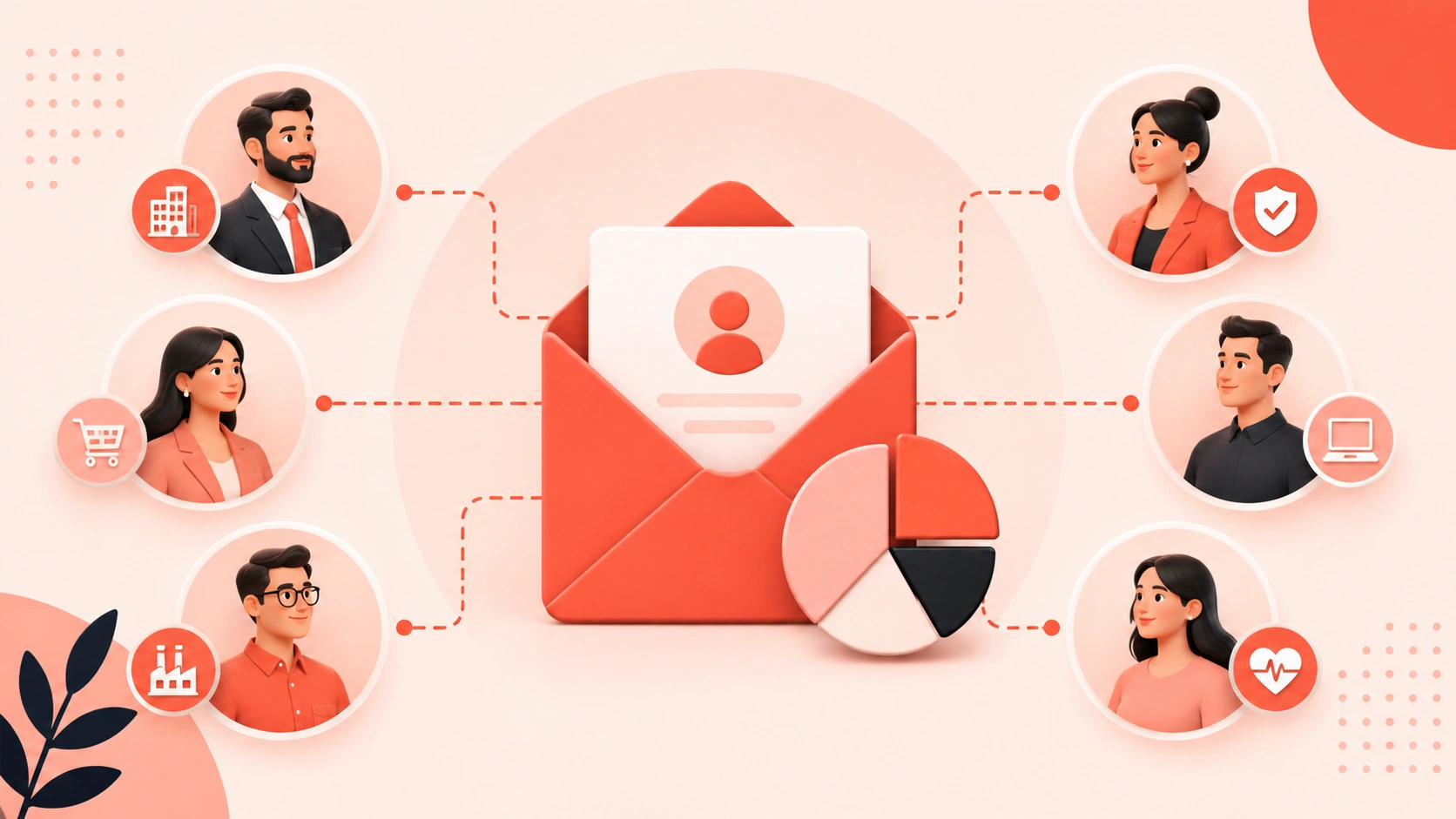
Because the moment you start selling to a business, you are not selling to one person. You are selling to a committee. Multiple people with competing agendas, different risk tolerances, and different definitions of 'good enough.' According to 6Sense data, the average B2B buying team now consists of 11 decision makers. Eleven people who all need to say yes.
That complexity shapes everything — your messaging, your channels, your content, your timing. And it is why understanding the full B2B buyer journey is not a nice-to-have. It is the foundation.
How B2B Marketing Differs From B2C

The contrasts are not cosmetic. They go all the way down.
In B2C marketing, you are trying to create an emotional spark. The timeline is short. The decision is personal. The copy can be fun, irreverent, and designed to make someone click 'add to cart' at 11pm.
In B2B marketing, emotion still matters — but it shows up differently. B2B buyers fear making the wrong choice in front of their boss. They fear wasted budget. They fear a vendor that overpromises and underdelivers. Your job is to reduce that fear while making the case for ROI.
The buying cycle runs 3 to 18 months. Multiple stakeholders all need different content at different times. The B2B buying group is not a monolith — a finance lead reads your content differently than an IT lead. And your marketing has to speak to both.
- B2C decision timeline: minutes to days. B2B: weeks to 18 months.
- B2C decision makers: usually one. B2B: average of 11 in 2026.
- B2C drives emotional desire. B2B reduces professional risk.
- B2C is often transactional. B2B requires relationship-building at scale.
- B2C content can be casual and quick. B2B content needs to demonstrate real expertise.
None of this makes B2B marketing harder than B2C. Just different. Once you internalize the difference, everything else gets clearer.
The B2B Buyer in 2026: What Has Actually Changed
Here is the stat that should reshape how you think about marketing strategy.
B2B buyers are now 73 percent through their decision-making process before they first engage a vendor. Not 30 percent. Not 50 percent. Nearly three-quarters of the way to a decision — and you haven't even had a conversation yet.
They've read your blog. They've checked your G2 reviews. They've asked ChatGPT which tools to consider. They've forwarded your pricing page to their manager. And they've already formed an opinion about you.
That opinion was built in the dark, in what marketers call the 'dark funnel' — activity you cannot track in any CRM. This is why demand generation has replaced lead generation as the strategic priority for serious B2B teams. You cannot afford to only show up when someone raises their hand.
The Rise of the AI-Assisted Buyer
This one is new. And it is moving fast.
According to Thunderbit's 2026 B2B buying research, 94 percent of B2B buyers are now using AI tools like ChatGPT during their buying process. Nearly 29 percent start their vendor research with an AI tool more often than with a search engine. Over half ask AI for a vendor shortlist before they ever Google anything.
Read that again. Half of your potential buyers might be asking ChatGPT to recommend a tool in your category. If you are not showing up in those AI-generated answers, you are not on the shortlist.
Getting into AI answers is not a separate strategy from content marketing. It is an extension of it. Structured, authoritative, deeply useful content that clearly answers specific questions is what AI systems pull from. Thin, generic content does not get cited.
Peer Trust Has Become the Deciding Factor
Here is a number worth sitting with. 73 percent of B2B marketing executives now rank word-of-mouth and peer recommendations as the most influential factor in deciding which vendors to consider, per Wynter's 2024 research.
And it is not just referrals. 60 percent of B2B buyers say software comparison sites are their most consulted research source. Ahead of vendor websites. Ahead of analyst reports. Ahead of sales conversations.
That tells you something important. By the time a buyer reaches out to you, they have already heard from your customers. They have read your G2 reviews. They have asked peers in Slack communities what they think.
This is why building real credibility through honest content, strong reviews, and customer stories is not a brand exercise. It is a revenue generation exercise.
Millennials and Gen Z Now Run the Buying Process
73 percent of all B2B buyers are now Millennials or Gen Z, according to TrustRadius. These buyers carry their consumer habits to work. They expect digital self-service. They want to evaluate options at their own pace. They are deeply skeptical of anything that feels like a sales pitch disguised as content.
Write for them. Be direct. Be honest about trade-offs. Kill the corporate speak.
The 8 Core B2B Marketing Strategies That Work in 2026
There is no universal playbook. But there are strategies with strong track records across industries and company sizes. Here is what the data supports right now.

1. Content Marketing and SEO
Content marketing is still the backbone. 91 percent of B2B marketers include it as part of their overall strategy, and it is not hard to see why. Organic content compounds. A well-researched, genuinely useful article you publish today can drive qualified pipeline for three years.
But the bar has never been higher. AI has flooded the internet with mediocre, recycled content. Buyers scroll past it. Google penalizes it. What actually works now is content that demonstrates real expertise. Original research. Counter-intuitive takes that challenge conventional wisdom. Practical, specific guides built from lived experience — not rewritten blog posts.
HubSpot's 2026 State of Marketing Report makes it blunt: 83 percent of marketers now believe quality matters more than posting frequency. One exceptional article beats ten average ones.
For B2B teams, the smartest content investment is topic cluster architecture — a central pillar page linked to a web of supporting content that signals deep authority on your core subject matter. Pair this with a clear lead generation strategy and you have a machine that keeps producing pipeline long after you stop actively promoting it.
What to do:
- Kill thin content. Audit your top 20 pages and redirect or consolidate low-performers.
- Invest in original research, benchmarks, or primary data. No one else can copy it.
- Optimize for AI answers, not just Google ranking. Structure your content to answer specific questions clearly.
- Build topic clusters, not just individual blog posts.
2. Account-Based Marketing (ABM)
ABM is how serious B2B teams operate at scale. Instead of casting a wide net and hoping the right accounts show up, you identify your best-fit accounts first — then build campaigns specifically for them. It flips the funnel. You define your targets before you define your messaging. Our full guide to account-based marketing covers the mechanics from start to finish.
The numbers are hard to argue with. HubSpot's 2026 State of Marketing Report found that 96 percent of marketers using personalized ABM reported increased sales. Not 'more traffic.' Actual sales.
ABM works best when you have a clearly defined ICP, a small-to-medium addressable market, and a sales cycle long enough to justify personalized outreach. If you are going after enterprise accounts, ABM is not optional. It is the strategy.
There are three tiers: one-to-one (5-15 strategic accounts, fully custom campaigns), one-to-few (20-100 accounts grouped by characteristics), and one-to-many (hundreds of accounts with technology-enabled personalization). Most teams start with one-to-few and scale from there. Matching your approach to the right ABM software matters because the tooling requirements are very different at each tier. And make sure you track the right ABM metrics from day one — account engagement score, influenced pipeline, and deal velocity tell you far more than MQL volume ever will.
What to do:
- Define your ICP before you touch your target account list. Vague ICPs produce bad ABM.
- Use intent data to prioritize which accounts to run with first.
- Create account-specific landing pages, case studies, or ROI models for tier-one targets.
- Align with sales on outreach sequence and timing. ABM without sales buy-in is just fancy targeting.
3. Email Marketing
Email keeps defying the obituaries people keep writing for it.
According to Litmus research, email delivers an average ROI of $36 for every $1 spent, outperforming paid search, display, and social across the board. And 77 percent of B2B buyers still prefer email as their primary channel for vendor communication.
But there is a massive difference between good B2B email and bad B2B email. Bad B2B email is blasting 10,000 contacts with the same message every Tuesday. Good B2B email is sending the right content to a carefully segmented audience at exactly the right stage of their evaluation process.
The fundamentals: build a quality list, segment aggressively, personalize beyond just name and company, and test subject lines, send times, and CTAs constantly. If you have not invested in email marketing automation yet, you are doing this manually and leaving serious efficiency on the table. And do not underestimate the follow-up email — it is often where deals actually move.
What to do:
- Segment by industry, company size, buying stage, and persona. Not just by 'lead source.'
- Map your nurture sequences to the buyer journey, not to your product features.
- Test one variable at a time. Subject line this week. Send time next week.
- Monitor deliverability. A 10 percent bounce rate will tank your sender reputation.
4. LinkedIn Marketing
For B2B, LinkedIn is not one channel among many. It is the channel. 85 percent of B2B marketers say LinkedIn is their most effective social platform. 62 percent say it generates leads at twice the rate of any other social platform. And with LinkedIn lead generation combining organic thought leadership with paid targeting by job title, seniority, company size, and industry — nothing else comes close for B2B precision.
But here is what most companies get wrong. They treat LinkedIn marketing as a billboard. They post product announcements, industry news shares, and 'we are hiring' updates — then wonder why nothing happens.
The accounts that win on LinkedIn in 2026 are doing something different. Their executives and senior individual contributors are publishing real opinions. Challenging assumptions. Sharing honest takes on their category. When a VP of Sales at a target account sees your CEO write something genuinely insightful about a problem they are living with — that is a touchpoint no paid ad can replicate.
Two-track strategy: your company page for brand consistency and credibility, plus personal thought leadership from your senior team for reach and relationship-building.
What to do:
- Identify three to five people on your team with something real to say and coach them to post consistently.
- Use LinkedIn ads for retargeting your blog readers and targeting matched account lists.
- Comment thoughtfully on posts from people at your target accounts. Not 'great post!' Actually add something.
- Publish long-form posts when you have data or an experience worth sharing. Short posts for quick takes.
5. Demand Generation
Demand gen is about creating awareness before buyers are actively looking. It is education-first marketing. Webinars, podcasts, thought leadership content, industry events, community participation. It is the work that fills the top of your funnel six months from now. For a detailed breakdown of how it works — and how it differs from traditional lead gen — the demand generation vs. lead generation comparison is worth reading before you set your next quarter's budget.
Why does demand gen matter more now? Because of the dark funnel. Buyers are researching on their own, forming opinions before they ever identify themselves. If you are not visible in the channels where that research happens, you are being ruled out before the game starts.
The 2026 EMARKETER data is clear: experiential marketing and events ranked as the second-highest investment priority for B2B marketers this year, right after content. In-person conversations at events still generate the most trusted touchpoints in the B2B buying process.
For SaaS teams specifically, SaaS demand generation has its own playbook that maps to the product-led and sales-led growth models most SaaS companies run.
6. Inbound vs. Outbound: You Need Both
A lot of B2B teams get religious about this. Inbound-only. Or pure outbound. The reality is that the highest-performing GTM motions run both in parallel. Inbound lead generation brings buyers to you when they are actively researching. Outbound lead generation lets you reach your best-fit accounts before they start looking. Together, they create coverage across the entire buying cycle.
The key is not to run them in silos. The messaging has to be consistent. And the handoff between marketing and sales has to be clean — the right person, at the right time, with the right context.
7. Video Content
This one has moved from 'interesting experiment' to 'table stakes' faster than most teams expected.
88 percent of B2B buyers have watched video content to learn about products or services in the past three months, according to Brightcove research. 14 percent of B2B buyers say video is the most useful content format when making a purchase decision — ahead of whitepapers.
Short-form video is now the single highest-ROI content format in marketing according to HubSpot's 2026 data. 104 percent more marketers named it their most valuable channel compared to 2024. These numbers are not subtle.
For B2B, video works best as explainers on complex topics, customer stories, behind-the-scenes product demonstrations, and founder-led content on LinkedIn. The production does not need to be expensive. It needs to be real.
8. Events and In-Person Marketing
Events never actually died. They just got crowded out by digital hype for a while. Now they are back, and they are working. 78 percent of B2B marketers have allocated budget to experiential marketing in 2026, per EMARKETER. When your prospect shakes your hand, they remember you. That is harder to engineer digitally. If you are investing in conference presence, make sure you have a clear follow-up plan. The guide on what to do after a B2B event gives you a practical post-event framework that most teams skip.
B2B Marketing Channels: Where to Actually Show Up
You cannot be everywhere. The best B2B marketing teams pick two or three channels, do those exceptionally well, and expand only when they have proven traction.
Here is a realistic breakdown of the main channels and what to actually expect from each.
Organic Search / SEO
Still the best long-term investment for most B2B companies. High intent. Compounding returns. Works while you sleep. The key change in 2026 is that SEO now includes AI visibility. Being in Google's AI Overviews, ChatGPT citations, and Perplexity answers requires structured, authoritative content that is easy for AI systems to parse and reference.
ChatGPT is currently growing as a B2B search platform at 14 percent annually and holds 3.2 percent of the B2B search market, per SeoProfy. That number is going one direction.
Already covered above in strategy. The short version: 85 percent of B2B marketers name it most effective, 62 percent say it generates leads at double the rate of any other social platform. Prioritize organic thought leadership first, paid targeting second.
The most cost-efficient channel at scale. Your owned audience. No algorithm dependency. The full potential is unlocked only when you pair good segmentation with strong email marketing campaign design and honest, persona-specific copywriting. Cold email still works too — it just requires more personalization than most teams apply. If your cold email open rate is under 30 percent, start with the subject line.
Paid Advertising
LinkedIn Ads for targeting precision. Google Ads for high-intent bottom-of-funnel queries. The rule is simple: use paid to amplify what is already working organically. Paid without a content foundation is a leaky bucket — you stop spending, the leads disappear.
US B2B digital ad spend is projected to hit $23 billion by 2026, up from $18.3 billion in 2024. If your competitors are in market with paid, you need to be too — just smarter about targeting.
Cold Outbound (Email and Phone)
Cold outbound is not dead. It is just harder. The personalization bar has gone up. Generic sequence blasts get ignored or spam-filtered. But a well-researched, timed cold email to the right person at the right moment still converts. The same goes for cold calling — the teams reporting the best results are using trigger-based outreach tied to real buying signals: new funding, key hires, competitor contract renewals, job postings that signal a new initiative.
Those signals are not something you can reliably track manually. That is where buying triggers and intent data platforms become essential infrastructure — not optional add-ons.
Review Platforms and Social Proof
G2, Capterra, TrustRadius, Gartner Peer Insights. 60 percent of B2B buyers say software comparison websites are their most consulted research source. Your review profile is often the first impression — before your homepage. Get your happiest customers to leave detailed, honest reviews. Respond to negative ones with genuine transparency. And track buying signals that come from review site engagement — buyers who spend time on competitor comparison pages are often in active evaluation mode.
Data: The Part Everyone Says They Understand But Mostly Doesn't
I'm going to be direct about this.
Most B2B marketing strategies fail not because of bad ideas, but because of bad data underneath those ideas.
You build a brilliant ABM campaign. You define your ICP. You write sharp, persona-specific messaging. Then you run it against a contact database where 28 percent of the emails bounce, 20 percent of the job titles are two years out of date, and 15 percent of the companies have been acquired.
The campaign fails. You blame the channel. You should blame the foundation.
B2B contact data decays at 22 to 30 percent per year. That means roughly one in four records in your CRM is wrong or outdated right now. This is the B2B data decay problem, and it is not a minor inconvenience — it is a compounding drag on every campaign you run.
What Good B2B Data Actually Looks Like
Good B2B data has four layers. Contact data — verified emails and direct dials. Firmographic data — company size, industry, revenue, location, headcount. Technographic data — what tools they currently use. And intent data — what they are actively researching right now.
Each layer serves a different purpose. Firmographic data is how you build and segment your ICP. Technographic data tells you who is using a competitor or a complementary tool, which is often your best signal for timing and messaging. Intent data tells you which accounts are in active research mode right now — so you prioritize your limited outreach capacity against the accounts most likely to convert.
Data Enrichment: The Fix for Incomplete Records
Most B2B teams are working with incomplete records. A lead comes in with just a name and work email. A CRM entry has a company name but no industry, no headcount, no tech stack. This is where B2B data enrichment becomes a workflow, not a project.
Enrichment appends what is missing. You have a name and company — enrichment gives you the verified direct dial, the seniority level, the firmographic profile, the technographic stack. SMARTe's data enrichment platform pulls from a database of 290M+ contacts to do this automatically across your CRM, so your sales team is always working from current, complete data rather than guessing.
The advanced teams are also using waterfall enrichment — cascading through multiple data vendors in priority order until a match is found. This maximizes match rates and avoids the single-vendor coverage gaps that leave holes in your data.
Intent Data: The Signal That Changes Prioritization
Intent data is behavioral signal data that tells you which companies are actively researching topics related to your product category. If seven employees at a target account have consumed five or more pieces of content about 'sales intelligence platforms' in the past two weeks, that is a signal worth acting on today. Our guide to intent data explains how it works, where it comes from, and how to use it without making your outreach feel creepy.
For ABM teams, intent data is the difference between working from a static target account list and working from a dynamic priority list that reflects actual buying behavior in real time.
And beyond intent data platforms, do not overlook the behavioral signals already in your existing stack. Tracking job changes at your champion accounts tells you when to re-engage. Champion tracking tells you when a key advocate has moved to a new company — often your warmest possible outbound opportunity.
First-Party Data: Your Biggest Underutilized Asset
As third-party cookies continue their slow fade and data privacy regulations tighten globally, first-party data — the behavioral data you collect directly from your own channels — has become the most valuable data you own. Website visits, content downloads, webinar attendance, product usage signals. All of it feeds better segmentation, better personalization, and better AI model training.
Teams that invest in first-party data infrastructure now are building a competitive moat. Teams that still rely entirely on third-party data are building on a foundation that is actively eroding.
If you are evaluating which data vendors to trust with your pipeline, the guide on evaluating a B2B data partner is the right framework — it covers accuracy, compliance, coverage, and integration requirements without the vendor marketing spin.
AI in B2B Marketing: What's Real, What's Hype, and What You Should Actually Do
96 percent of B2B marketers now report using AI in their roles, per the Demand Gen Report's 2026 B2B Trends Research. 47 percent rank it as the top trend they are most excited about. 45 percent say its main benefit is efficiency.
That is real. But most teams are using AI for the easy stuff. First drafts. Subject line variations. Repurposing long content into short clips. Those are legitimate time savings.
The teams pulling ahead are doing something different. They are using AI at the strategy layer: predictive lead scoring, automated intent signal detection, personalization at scale across hundreds of accounts, AI-powered prospecting that surfaces the right account at the right moment with the right message.
AI and the Search Landscape Shift
This is where B2B marketers need to pay the most attention right now.
Buyers are increasingly asking AI systems for vendor recommendations. They type 'what is the best sales intelligence platform for a 50-person SaaS team' into ChatGPT and they get a list. If you are not on that list, you do not exist to that buyer — even if you rank on page one of Google.
58 percent of marketers say AI referral traffic has significantly higher intent than traditional search traffic, per HubSpot's 2026 State of Marketing Report. Visitors from AI answers are further along in the buying journey before they land on your site.
Getting into AI-generated answers requires being a genuinely authoritative source on your topic. Structured content. Specific, clearly-stated answers to specific questions. Original data that AI systems want to cite. This is what the GEO (Generative Engine Optimization) conversation is really about — and it is not separate from SEO. It is the next layer of it. Your full AI in B2B marketing strategy needs to account for this shift explicitly.
AI-Powered Prospecting and SDR Tools
One area where AI is generating measurable, documented results is prospecting. AI sales prospecting tools can research accounts, identify the right contacts, score them against your ICP, draft hyper-personalized outreach, and prioritize follow-ups — all without a human doing the legwork. AI SDRs are becoming a genuine part of the modern GTM stack for growth-stage companies that cannot afford to fully staff an outbound team.
That said: AI-generated outreach without human review tends to sound like AI-generated outreach. Buyers notice. The best results come from AI doing the research and initial drafting, with a human adding the specific context — the relevant news, the shared connection, the genuine observation — that makes the message feel like it was written for that person.
The broader category of AI marketing tools is expanding fast. Evaluate based on output quality and integration with your existing stack, not feature count.
What Not to Outsource to AI
Strategy. Positioning. The decision about which accounts to prioritize. The voice and point of view that makes your content distinctive.
AI is a force multiplier for execution. It is not a replacement for judgment. The teams that automate strategy — and lose the human insight that made their content credible in the first place — are making a trade they will regret.
The B2B Marketing Funnel: From Awareness to Closed Revenue
Understanding where marketing sits in the full B2B sales funnel is essential if you want to connect your work to revenue. Marketing does not end at the lead. It has to support the buyer through every stage, from first awareness through the final decision and into retention.
Top of Funnel: Building Awareness and Creating Demand
This is where demand generation lives. Blog content, LinkedIn thought leadership, webinars, events, podcasts. Your goal is to be present and credible in the spaces your ICP visits before they are actively evaluating vendors. Most teams underinvest here. They focus entirely on bottom-of-funnel leads and wonder why pipeline dries up six months later. Awareness work is the top of the machine. Turn it off and the whole thing eventually stops. The guide on the demand generation funnel maps out how to think about this investment across your full go-to-market motion.
Middle of Funnel: Consideration and Evaluation
Buyers are comparing you against alternatives. They are reading case studies, watching product demos, asking peers for opinions, and checking review sites. Your content needs to directly address evaluation criteria — not your features in isolation, but your features in the context of their specific situation and alternatives. This is where the marketing qualified lead handoff to sales happens, and where your lead scoring model determines who gets prioritized. The SQL vs. MQL distinction matters more here than at any other stage — passing the wrong leads to sales is one of the most expensive mistakes a marketing team can make.
Bottom of Funnel: Decision and Close
The buyer is ready. They need pricing transparency, ROI justification, security documentation, implementation details, and contract clarity. Sales takes the lead, but marketing should have content pre-built for every common objection. Detailed competitive comparisons. Customer case studies by vertical. ROI calculators. The discovery call is often the pivot moment — what your sales team says there either accelerates or kills the deal. Make sure they have the assets they need.
Post-Sale: Retention and Expansion
Most B2B marketing guides stop at the close. That is a mistake. Expansion revenue is the highest-margin revenue most B2B companies have. Marketing plays a real role in customer success: onboarding content, use-case education, upsell enablement, and community-building all influence customer retention rates and expansion velocity. The buyers you have kept are also your best source of the peer recommendations that drive the next new customer.
B2B Marketing Metrics: What to Track (And What to Stop Tracking)
Most marketing teams track the wrong things. They report on page views, social followers, and email open rates. These are not useless — but they will not tell your CFO whether marketing is working.
Here are the metrics that connect marketing activity to revenue. For a full breakdown with benchmarks, the guide on B2B marketing metrics is worth bookmarking.
Pipeline Metrics
- Marketing-sourced pipeline: The percentage of total pipeline that originated from marketing channels. This is the single most important marketing metric.
- Pipeline velocity: How fast deals move through stages. A marketing attribution problem if deals are stalling at the awareness-to-consideration transition.
- MQL to SQL conversion rate: A clean signal for lead quality. If sales is rejecting most of your MQLs, your targeting or qualification criteria is off.
- Cost per pipeline opportunity: What it costs marketing to generate one qualified sales opportunity. Compare across channels.
Revenue Metrics
- Marketing-attributed revenue: How much closed revenue traces back to a marketing touchpoint. Imperfect but essential.
- Customer acquisition cost (CAC): Total sales and marketing spend divided by new customers acquired in a period.
- CAC payback period: How many months of customer revenue it takes to recover CAC. Under 12 months for healthy SaaS; under 18 for enterprise.
- Expansion revenue influenced by marketing: How much upsell and cross-sell revenue connects to marketing activities like content, community, or product education.
Engagement Quality Signals
- Content's influence on closed-won deals: Which blog posts, case studies, or landing pages appear in the buying journey of your best customers?
- Account engagement score: Especially for ABM programs. How many contacts at target accounts have engaged with your content or ads?
- Lead quality score: Are leads actually matching your ICP criteria, or are they inflating your MQL numbers with noise?
A note on attribution: multi-touch attribution is imperfect. Accept that and use it anyway. The question is never 'which single touchpoint caused this deal?' It is 'which combination of touchpoints most consistently appears in our best customers' journeys?' That question points you toward the right investment. And tracking lead generation KPIs starts with agreeing on definitions — MQL, SQL, opportunity — before you debate the numbers.
How to Build a B2B Marketing Strategy from Scratch in 2026
Theory is easy. Building something that actually generates pipeline is harder. Here is the process.
Step 1: Define a Real ICP
Not 'mid-market SaaS companies.' That is a category, not an ICP. A real ICP specifies: industry, company size range, geography, tech stack requirements, team structure, pain points, and what a bad-fit customer looks like. If you cannot describe your ICP in enough detail to exclude the wrong accounts, it is not specific enough. Start with your best five existing customers. What do they have in common? That is your ICP. The ideal customer profile guide walks through the full framework — including how to translate ICP into targeting criteria for ads, outbound sequences, and content strategy.
Step 2: Map the Buyer Journey
Who is involved in the purchase decision? What are their individual priorities and concerns? What questions do they have at each stage? What would make them stall? And what content would help them move forward? The answer to each of these questions is a content brief. Build the map before you build the content. The customer journey and the specific customer touchpoints you own are the architecture your entire marketing system runs on.
Step 3: Pick Two or Three Channels and Commit
Most B2B teams spread across too many channels and do none of them well. Pick the two or three where your ICP actually spends time and where you can execute with real quality. For most B2B companies in 2026: organic content and SEO, LinkedIn, and email nurture. Add paid or outbound depending on budget and sales cycle length. Then stay focused until you have proven traction.
Step 4: Build a Content Strategy Tied to Revenue
Map your content to the buyer journey. Top-of-funnel awareness content — educational, non-promotional. Mid-funnel comparison content — case studies, feature comparisons, ROI calculations. Bottom-of-funnel decision content — security documentation, implementation guides, customer references. Then build the internal links and content architecture that signals topical authority to search engines and to AI systems. The data-driven marketing approach means every content decision traces back to a conversion goal, not a publication calendar.
Step 5: Get Your Data Infrastructure Right
Accurate contact data, a CRM that is actively maintained, enrichment workflows that keep records current, and attribution tracking that connects marketing activity to pipeline. Without this foundation, you are guessing at what is working. The guide on how to build your CRM database is the right starting point — it covers data structure, enrichment integration, and the hygiene practices that most teams skip until the data becomes unusable.
Step 6: Align with Sales Before You Launch Anything
Shared definitions of what a qualified lead looks like. Shared CRM data. Joint pipeline reviews. A clear handoff process. Marketing and sales misalignment is not a personality problem — it is a structural one. Fix the structure. The go-to-market strategy conversation is where this alignment has to happen, and it needs to happen before the first campaign goes live, not after the first quarter of missed pipeline targets.
Step 7: Define KPIs and Review on a Cadence
Set specific targets before you launch. Pipeline generated. MQL to SQL conversion rate. CAC. Review them monthly at minimum. Adjust based on data, not intuition. And when something stops working, change it fast. The best B2B marketing teams are not the ones with the best initial plan. They are the ones that iterate fastest based on real feedback.
What the Best B2B Marketing Teams Are Doing Differently in 2026
I have spent time studying what separates marketing teams that consistently generate pipeline from those that are always one more tactic away from solving their pipeline problem. The CMI's 2026 B2B Content and Marketing Trends research found that 74 percent of marketers credit 'strategy refinement' — not more budget, not more tools — as the primary reason for their improved results. Here is what that refinement actually looks like in practice.
They Have Specificity Others Don't
Their ICP is defined tightly enough to be operationally useful. Their positioning is clear enough to tell buyers exactly who they are for — and who they are not for. Their content addresses specific, documented pain points rather than generic industry topics.
Understanding real customer pain points is not a one-time exercise. It is an ongoing process of talking to sales, listening to discovery calls, reviewing churned customers, and reading what your ICP writes on LinkedIn when they think no one from your company is watching.
They Treat Data as Infrastructure, Not a Service
The best teams do not think of data as a list they buy once. They treat it as infrastructure they maintain continuously. Regular enrichment. Decay monitoring. Quality audits. Integration between their data provider, CRM, and sales engagement tool. They know that good B2B data is a competitive advantage that compounds — the cleaner your data, the better your targeting, the higher your conversion rates, the more efficient your CAC.
They Build Trust Before They Ask For Anything
Trust is the quiet differentiator. The data from Wynter is clear: 73 percent of B2B marketing executives rank peer recommendations as the most influential factor in shortlist formation. The teams winning in this environment are the ones that have spent years publishing genuinely useful content, being honest about what their product does and does not do, and building a reputation that survives scrutiny. Trust compounds too. And it is almost impossible to fast-track or fake. The teams investing in compliant, ethical data practices and honest positioning are building something their competitors cannot easily copy.
They Have Tight Marketing and Sales Alignment
The shared ICP. The shared definition of qualified. The shared pipeline dashboard. The joint weekly review. This is not aspirational — it is operational. The best B2B marketing teams are measured on the same revenue number as their sales counterparts. That shared accountability is what creates real alignment. Everything else — the process, the handoff, the content — follows from that shared goal. The B2B sales process and the marketing process are not two separate workflows. They are one connected system.
They Use Their GTM Stack Intentionally
The average B2B company now uses 25 to 30 marketing and sales tools. Most of them are underutilized. The best teams rationalize their GTM tech stack annually — cutting tools that do not integrate cleanly or do not drive measurable outcomes, and investing deeply in the tools that do. They also invest in the people who can use those tools well. Tool-switching without skill-building is just expensive friction.
The Bottom Line
B2B marketing in 2026 rewards companies that are specific about who they serve, genuinely useful to that audience, and honest about what they offer.
The playbook has not changed at its core: understand your buyer, show up where they look for answers, build trust before you ask for the meeting, and make it easy for them to say yes. What has changed is the execution environment.
AI is reshaping search. Buyers complete three-quarters of their evaluation before they identify themselves. Peer recommendations outweigh vendor content as a trust signal. Data quality separates the teams that execute at a high level from the teams that spend budget on activity that never quite converts.
None of this requires an enormous budget. It requires clarity, consistency, and a genuine commitment to being useful to the people you are trying to reach.
That is still, and probably always will be, the job.