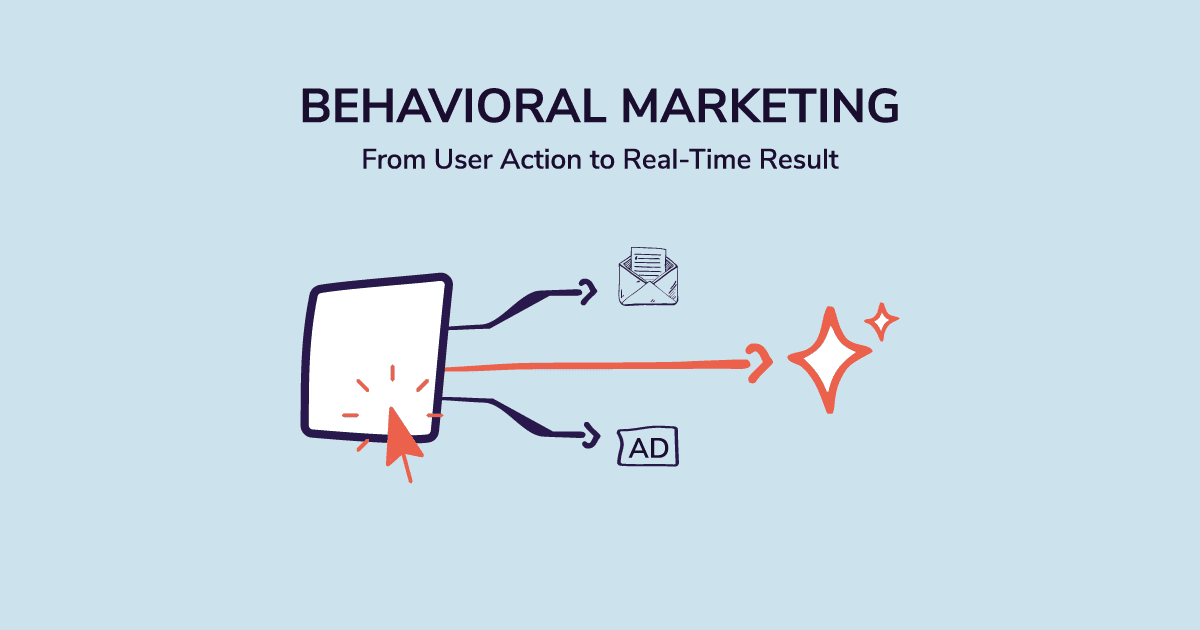
Behavioral marketing focuses on what buyers do, not just who they are.
Every click, visit, search, and interaction leaves a signal. When these signals are connected and understood, they reveal intent. This is how modern marketing moves from guesswork to precision.
In this guide, we break down behavioral marketing from the ground up. You will learn how behavioral segmentation works, how it differs from demographic and firmographic targeting, and how real brands use behavior to drive engagement, conversion, and revenue.
We also cover practical execution. How behavioral data turns into buying signals. How teams apply it across content, lead scoring, ABM, and retention. And how the right go to market tech stack makes behavioral marketing actionable.
This article is built for B2B marketers and revenue teams who want clarity, not theory. Behavior changes. Strategy must change with it.
What is Behavioral Marketing?
Behavioral marketing is a data driven marketing strategy that uses observed user behavior to shape messaging, channels, and timing across the buyer journey. Instead of relying on static attributes like industry or company size, it responds to real actions taken by prospects and customers.
These behaviors include website interactions, content consumption, email engagement, product usage, buying history, and intent signals across platforms. Each action indicates interest, readiness, or hesitation. Behavioral marketing translates those signals into relevant marketing responses.
In B2B, buying decisions are long, non linear, and involve multiple stakeholders. Traditional demographic targeting fails to capture this complexity. Behavioral marketing fills that gap by focusing on intent progression rather than audience labels.
For example, two buyers from the same company may be at very different stages. One is researching. The other is comparing vendors. Behavioral marketing allows marketers to engage both without forcing them into the same funnel stage.
From a go to market perspective, behavioral marketing improves alignment between marketing and sales. High intent actions can trigger sales outreach. Low intent actions stay in nurture. This reduces wasted effort and shortens sales cycles.
Teams that implement behavioral marketing correctly see higher engagement, better lead quality, and stronger pipeline contribution. The value comes from relevance at scale, not automation alone.
At its core, behavioral marketing is about timing, context, and intent.

SMARTe GTM Intelligence
Start Smarter Prospecting Today
Types of Behavioral Marketing
Behavioral marketing operates across multiple touchpoints. Each type focuses on a specific category of behavior and serves a different objective in the buyer journey.
1. Website Behavior Based Marketing
This approach uses on site engagement data to adapt content and calls to action in real time. It tracks page depth, visit frequency, session patterns, and high intent pages such as pricing, integrations, or comparison content.
In B2B, repeated visits to product and pricing pages often signal buying intent. Marketing teams can respond by surfacing demos, case studies, or live chat. Early stage visitors, on the other hand, benefit more from educational content.
This type improves conversion without increasing traffic.
2. Email Behavior Based Marketing
Email behavior provides clear feedback on message relevance. Opens, clicks, replies, and inactivity all act as signals.
A prospect who clicks feature focused emails may be ready for deeper product evaluation. Someone who only engages with thought leadership content is likely still in research mode. Behavioral email marketing adapts cadence, content depth, and messaging based on these signals.
This prevents over nurturing and keeps engagement high.
3. Product Usage Based Marketing
Product behavior is one of the strongest indicators of value perception, especially in SaaS. It includes feature adoption, frequency of use, drop offs, and expansion signals.
Marketing and customer teams use this data to guide onboarding, drive activation, and identify upsell opportunities. For example, consistent use of core features signals readiness for advanced workflows or premium plans.
This type directly impacts retention and lifetime value.
4. Purchase and Account Intent Based Marketing
This focuses on transactional behavior and account level intent. It includes previous purchases, renewal timelines, upgrades, and aggregated intent signals from multiple channels.
In B2B, this enables account based marketing strategies where outreach is prioritized based on buying readiness, not just firmographics. Sales and marketing operate from the same intent framework.
This improves pipeline efficiency and forecast accuracy.
5. Behavioral Retargeting and Paid Media
Behavioral retargeting uses past interactions to inform ad delivery. Rather than generic ads, prospects see messaging aligned to their last meaningful action.
A buyer who explored integration pages may see ads focused on compatibility. Someone who abandoned a demo form may see proof driven messaging. The goal is progression, not repetition.
When aligned with intent stages, behavioral paid media supports demand creation rather than chasing clicks.
Behavioral Segmentation in Behavioral Marketing
Behavioral segmentation is the process of grouping prospects and customers based on how they act, not who they are. It uses observed behavior to understand intent, readiness, and value perception across the buyer journey.
In behavioral marketing, segmentation is the operating system. Without it, behavioral data stays fragmented. With it, marketing becomes precise, scalable, and aligned to revenue outcomes.
In B2B, behavioral segmentation matters because buyers do not move in straight lines. They loop between research, evaluation, internal discussion, and validation. Behavior reveals where they actually are, even when they do not say it.
What Behavioral Segmentation Is Based On
Behavioral segmentation relies on first party and inferred data collected across touchpoints. These signals become meaningful only when grouped and interpreted correctly.
1. Engagement Behavior
This includes content views, page depth, time spent, scroll activity, email opens, and clicks. High engagement with bottom funnel content often signals buying interest. Light engagement with educational content signals early stage research.
Engagement behavior helps differentiate interest from curiosity.
2. Intent and Consideration Signals
Intent signals come from repeated visits to product pages, comparison pages, integrations, pricing, or competitor related content. In B2B, intent is rarely a single action. It is a pattern over time.
Behavioral segmentation clusters these patterns to identify accounts that are actively evaluating solutions.
3. Product and Feature Usage Behavior
For product led and SaaS businesses, usage behavior is critical. It includes logins, feature adoption, frequency, and drop offs.
Users who adopt core features behave differently from those who only explore. Segmentation based on usage supports onboarding, expansion, and churn prevention.
4. Purchase and Lifecycle Behavior
This includes trials, upgrades, renewals, downgrades, and repeat purchases. Lifecycle behavior shows how value is perceived over time.
Segmenting based on lifecycle behavior helps teams personalize messaging for new users, active customers, and at risk accounts.
Common Behavioral Segmentation Models
Behavioral segmentation can be applied in multiple ways depending on the go to market motion.
1. Funnel Stage Segmentation
This model groups users by where they are in the buying journey. Awareness, consideration, evaluation, and decision.
Behavior determines the stage, not assumptions. A prospect reading case studies and pricing pages belongs in evaluation, even if they are a first time visitor.
This model improves content relevance and sales timing.
2. Intent Level Segmentation
Here, segments are based on buying readiness. Low intent, medium intent, and high intent.
Low intent users stay in education. Medium intent users receive proof and differentiation. High intent users trigger sales engagement.
This prevents premature outreach and improves conversion rates.
3. Account Level Behavioral Segmentation
In B2B, buying decisions involve groups. Account level segmentation aggregates behavior across multiple users within the same company.
When multiple stakeholders show intent signals, the account moves into priority status. This model supports account based marketing and sales alignment.
4. Value and Expansion Segmentation
This focuses on long term value. Power users, growing accounts, stable accounts, and declining accounts.
Behavioral signals like feature adoption and usage frequency help predict expansion or churn before revenue is affected.
Behavioral Segmentation vs Demographic and Firmographic Segmentation
Demographic and firmographic segmentation define who the buyer is and which companies fit your ICP. Behavioral segmentation shows what buyers are actually doing across the buying journey.
In modern B2B marketing, firmographics establish fit, but behavioral signals determine priority, timing, and action.
Demographic and firmographic segmentation help identify who to target. Behavioral segmentation determines when and how to engage. High performing B2B teams combine all three, but behavioral segmentation drives execution and revenue impact.
How Behavioral Segmentation Is Used in B2B Marketing
Behavioral segmentation helps B2B teams decide what to say, when to say it, and who should act. It turns buyer actions into clear marketing and sales steps.
1. Content Personalization: Different segments see different content. Early stage buyers get educational resources. Buyers who are comparing options see case studies and proof. Decision makers see technical details and ROI content. This keeps content relevant without creating more assets.
2. Lead Scoring and Qualification: Behavior matters more than form fills. Actions like repeat visits or pricing page views signal real interest. Sales teams receive leads based on readiness, not volume.
3. Account Based Marketing Execution: Behavioral data shows which accounts are ready for outreach. High intent accounts get ads, sales follow ups, or leadership attention. Others stay in awareness programs. This keeps ABM campaigns focused and cost effective.
4. Retention and Expansion Programs: Customer behavior guides onboarding and feature education. Usage patterns highlight upsell chances and churn risk early. This improves lifetime value and reduces customer loss.
Expert Tip: Strong behavioral segmentation focuses on the actions that matter most. Ignore low value activity and look for behavior patterns over time. Each segment should connect to a clear marketing, sales, or customer action. Avoid complex segments and vanity metrics. A good segment answers one simple question. What should we do next. Behavioral segmentation works best when it evolves as buyer behavior changes.
Role of Consumer Behavior in Behavioral Marketing
Consumer behavior explains the patterns behind buyer actions. It focuses on how people research, compare, and make decisions. Behavioral marketing uses these patterns to decide how and when to engage buyers.
In simple terms, consumer behavior provides the logic. Behavioral marketing applies it using real data.
Behavioral marketing does not rely on assumptions. It observes actions like content views, repeat visits, product usage, and buying signals. These actions reflect consumer behavior in real time.
Understanding consumer behavior helps marketers interpret these actions correctly. For example, repeated visits to pricing pages often signal evaluation. Long time spent on educational content usually signals early research.
Without consumer behavior insights, behavioral data can be misleading. With it, teams understand intent, not just activity.
This connection is critical. Behavioral marketing works best when buyer actions are analyzed through the lens of consumer behavior. It ensures personalization feels relevant, timing feels right, and messaging supports how buyers naturally make decisions.
Consumer behavior does not replace behavioral marketing. It strengthens it by giving meaning to behavior based signals.
Real Behavioral Marketing Examples
Below are 7 real behavioral marketing examples. Each example shows how brands used real user actions to shape messaging, experience, and results.
1. Coca Cola Share a Coke Campaign
Coca Cola replaced its logo on bottles with popular names and common relationships like Friend and Family. People searched for bottles with names that mattered to them. Many shared photos on social media.
The brand did not guess interest. It reacted to human behavior. People like personalization and sharing. Coca Cola turned that behavior into action at scale.
The campaign increased engagement, social sharing, and sales. It also helped reverse years of declining consumption in key markets.
2. Amazon Personalized Product Recommendations
Amazon tracks what users search, view, and buy. Based on this behavior, it shows product recommendations across the website, app, and emails.
If a user looks at running shoes, Amazon suggests socks, gear, and related items. This saves time and increases relevance.
These recommendations drive a large share of Amazon revenue. They work because they respond to real behavior, not broad audience groups.
3. Netflix Content Personalization
Netflix tracks what users watch, skip, pause, and finish. It uses this behavior to decide what content appears on each user’s home screen.
Even show images change based on viewing habits. Two users rarely see the same layout.
This keeps users engaged longer and reduces cancellations. The experience feels personal because it is built on behavior.
4. Spotify Discover Weekly and Wrapped
Spotify analyzes listening behavior like saved songs, skips, and repeat plays. Every week, users receive a Discover Weekly playlist made from this data.
Spotify Wrapped uses yearly listening behavior to create a shareable summary. Users actively wait for it and share it online.
Both features increase engagement and loyalty by turning behavior into personalized experiences.
5. Zara Abandoned Cart Emails
Zara tracks shopping behavior on its website. When users add items to a cart but leave, Zara sends reminder emails with the same products.
Sometimes these emails include low stock alerts. This pushes users to act before items sell out.
The strategy works because it responds to real buying intent, not generic promotions.
6. Booking.com Urgency Messaging
Booking.com shows messages like Only 2 rooms left or 10 people are viewing this hotel. These messages are based on live search and booking behavior.
When users return to a hotel page, urgency messages help them decide faster.
This improves conversion by matching behavior with the right moment to act.
7. Facebook Dynamic Retargeting Ads
Facebook tracks product views through website tracking tools. If a user views a product and leaves, Facebook shows ads with the same product later.
These ads feel relevant because they reflect recent interest. They remind users without guessing.
This increases return visits and completed purchases.
All these brands succeed because they watch what users do and respond with relevance. That is the core of behavioral marketing. Behavior guides action.
Behavioral Marketing Data Sources
Behavioral marketing depends on accurate and reliable data. The quality of decisions depends on the quality of signals collected.
The most important source is first party data. This includes actions taken directly on your website, emails, product, and owned channels. First party data is accurate, compliant, and long term.
Key behavioral data sources include:
- Website activity like page visits, scroll depth, and return visits
- Email engagement such as opens, clicks, and replies
- Product usage data like feature adoption and frequency
- CRM activity including demos, calls, and deal movement
- Account level intent signals across channels
Strong behavioral marketing systems connect these sources into a single view of buyer behavior.
Behavioral Marketing Tools: The "Data-First" Tech Stack
A behavioral marketing strategy is only as strong as the data fueling it. You can have the most sophisticated automation tools in the world, but if the contact data inside them is inaccurate or incomplete, your behavioral signals are dead ends.
Tools are the vehicle, but data accuracy is the fuel.
The 4 Core Layers of a Behavioral Stack
A modern B2B stack is not a single platform; it is a connected ecosystem where different tools handle different stages of the signal:
- Analytics (The "What"): Tools that track digital footprint—page views, time on site, and event triggers.
- Marketing Automation (The "Response"): Platforms that operationalize the signal, triggering email workflows based on actions.
- CRM (The "Pipeline"): The system of record where marketing signals align with sales stages.
- Data Enrichment (The "Who"): The critical layer that turns a vague signal into a reachable person.
The "Reachability" Gap
This is where most behavioral strategies fail. A prospect might trigger a high-intent behavioral signal—like downloading a whitepaper or attending a webinar—but if your CRM lacks a direct phone number or a verified email, your sales team cannot act.
Behavioral intent has a short shelf life. If you cannot reach the prospect immediately, the signal expires.
Why SMARTe is Essential to the Stack
SMARTe acts as the reliability layer for your entire GTM stack. It ensures that when a behavioral signal is captured, your team has the accurate data needed to convert that signal into a conversation.
Unlike generic data providers, SMARTe focuses on Global Data Coverage and Mobile Number Accuracy, which are critical for reaching decision-makers who are researching your product.
Here is how SMARTe powers a behavioral strategy:
- Real-Time Enrichment: When a lead enters your Marketing Automation Platform (MAP) via a form fill, SMARTe instantly appends missing details—job title, seniority, and location—ensuring they are routed to the right nurture path immediately.
- Technographic Intelligence: SMARTe allows you to filter accounts based on their current tech stack. You can prioritize behavior from prospects who already use complementary tools (e.g., Salesforce or HubSpot users), ensuring "High Intent" is backed by "High Fit."
- Direct Access (Mobile Numbers): Behavioral signals often require a sales call, not just an email. SMARTe provides industry-leading coverage of direct mobile numbers, allowing sales reps to strike while the intent is fresh.
The Result: Actionable Intelligence
With SMARTe integrated into your stack, you stop wasting time on "ghost" leads. Marketing hands off fully enriched profiles, and Sales gets the direct access they need to close.
The goal isn't just to track behavior. The goal is to reach the person behind the behavior.
Stop letting high-intent leads slip through the cracks.
Give your sales team the direct mobile numbers and accurate data they need to act on behavioral signals instantly. Get a free demo of SMARTe today.