TL;DR:
A lead generation strategy is a repeatable system for attracting and capturing the contact details of people who could become customers. The strategies below cover both getting found (SEO, content, video, social) and getting in front of the right accounts directly (sales intelligence, ABM, outbound).
- Precision prospecting with verified contact and technographic data consistently outperforms broad, unfiltered outreach.
- SEO and content marketing compound over time. Businesses that blog see meaningfully more monthly leads than those that don't.
- Account-based marketing works best when a company already knows which accounts show buying signals, not when targeting is random.
- Reviews and case studies remove buying friction. B2B buyers increasingly consult peer reviews before purchasing.
- Lead generation strategy and lead generation tactics are different things. A strategy sets the direction. Tactics are the specific moves, forms, landing pages, A/B tests, that support it.
Lead generation strategy decides whether a sales team spends its week talking to the right people or chasing the wrong ones. Get it wrong, and revenue slows while competitors move in.
Teams rarely lack leads. They lack leads that convert. A form fills up. A demo gets booked. Then the deal goes quiet, because the person behind it was never a fit.
Below are 11 lead generation strategies that hold up in 2026, followed by 12 tactics that make each one work harder.
11 Lead Generation Strategies for 2026
1. Precision Prospecting with Sales Intelligence
Casting a wide net wastes a sales team's week. The teams that convert build a short list first, then go deep on each name.
Sales intelligence tools like SMARTe help with the first part. SMARTe's database covers 289M+ verified B2B contacts globally, including decision makers. Building a list starts from real, current data instead of a guess.
The bigger win is targeting. SMARTe helps define an ideal customer profile (ICP) using filters like revenue, headcount, and location. Outreach then goes to accounts that fit the profile, not just the industry. Add technographic data, and a rep knows what tools a prospect already runs before the first call. That changes what they say and how the prospect responds.
Precision B2B prospecting is what separates teams that hit quota from teams that just stay busy. Layer in buying signals and every outreach effort targets someone already showing interest, not a cold name from a list.
2. SEO and Content Marketing

SEO and content marketing keep bringing in high-intent leads long after publication. A blog post from a year ago can still be someone's first touch with the brand today.
Companies get this wrong in the same way: they chase traffic and forget conversion. More visitors without a way to capture them is just a bigger bounce rate.
What works:
- Publish content with real depth. Case studies, original data, and specific how-tos beat generic overviews every time. Google rewards content that answers the question completely.
- Build topical authority. Cover a subject from every angle: blog posts, FAQs, comparison pages. Search engines and AI answer engines start treating the site as a real source on that topic.
- Target commercial-intent keywords. Long-tail phrases like "best CRM for small business" bring in people closer to a decision, not just browsing.
- Add a lead magnet to every piece. An ebook, a checklist, or a gated report turns a reader into a contact.
- Repurpose one piece into different formats. A blog post becomes a LinkedIn post, a short video, and a slide deck. Each format reaches people who wouldn't have found the original.
Companies that blog consistently generate significantly more monthly leads than companies that don't. One well-researched post beats ten rushed ones.
3. Pay-Per-Click and Retargeting

PPC works when it captures intent that already exists. It fails when it chases attention that never converts.
PPC budgets often get wasted on broad, generic keywords. A few adjustments fix that:
- Target purchase-intent keywords. "CRM software" pulls browsers. "Best CRM for real estate under $50" pulls buyers.
- Retarget based on the last action taken. Someone who viewed pricing is a different audience than someone who read one blog post.
- Use lookalike audiences on LinkedIn and Meta to find new prospects who resemble existing customers.
- Rewrite ad copy around a number. "Cut lead follow-up time in half" beats "Best CRM Software" on click-through rate almost every time.
- A/B test the landing page, not just the ad. The ad earns the click. The landing page earns the lead.
The strongest PPC programs don't stop at the click. They build a path from the first ad view to the final sale, with conversion rate optimization applied at every step.
4. Social Selling and Proactive Outreach

Prospects are already active on LinkedIn while they browse a website. Social selling means showing up where they already are instead of waiting for them to find a form.
Social listening tools surface people asking questions related to a product or service. Reaching out with something useful, before pitching anything, positions a rep as a resource instead of another cold message.
LinkedIn prospecting and a strong social selling index go together. Reps who post, comment, and engage consistently get warmer replies than reps who only show up in someone's inbox. Combine it with live chat, SMS, or messenger apps. Outbound prospecting starts to feel less like interruption and more like an expected conversation.
5. Video Marketing for Engagement
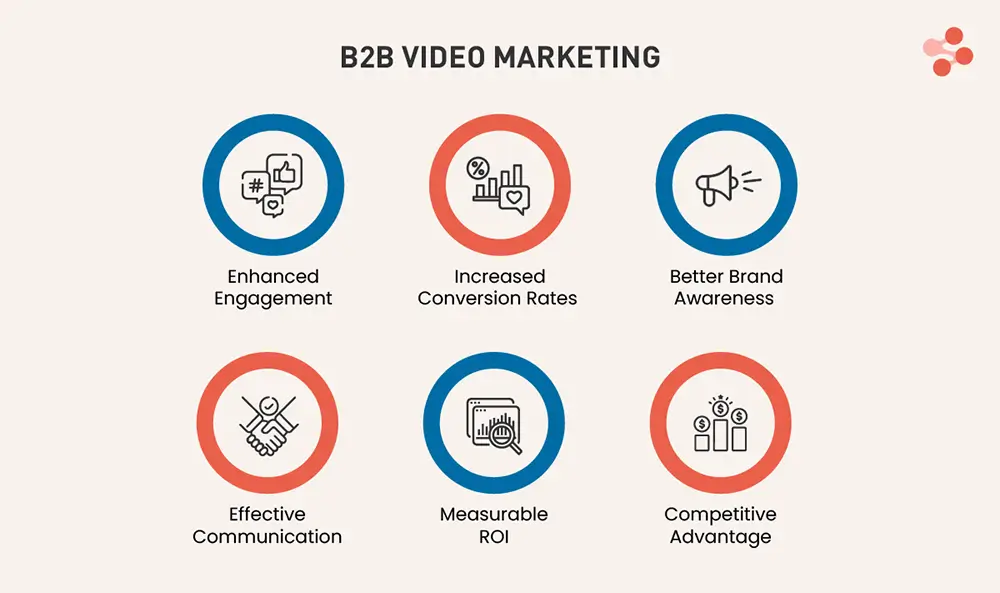
Video is no longer optional. Ninety-six percent of people have watched an explainer video to learn about a product or service. Eighty-four percent say they want to see more video from brands, according to Wyzowl's 2026 State of Video Marketing report.
Video works because it does in seconds what text takes paragraphs to do: it shows, rather than tells.
How to use it for lead generation:
- Product demos and tutorials. A real walkthrough builds more confidence than a spec sheet.
- Customer testimonials on video. A customer's own words carry more weight than a quote on a page.
- Behind-the-scenes content. Buyers trust people, not just logos.
- Short-form social video. LinkedIn and Instagram reward native video with more reach than a link post.
- Video inside email. Emails with video routinely see stronger engagement than plain-text sends.
Add a lead capture form or a clear call to action to every video. A video that only earns views, with no next step, is a missed lead.
6. Partner and Influencer Collaborations

A recommendation from a trusted voice moves faster than any cold outreach a sales team can run on its own.
Influencer marketing has grown into a real B2B channel, not just a B2C one. When a respected figure in a niche vouches for a product, the leads that follow arrive warmer and close faster than leads from a generic ad.
How to do it well:
- Find partners who already reach the target audience. Complementary software vendors and industry voices work better than broad reach with no overlap.
- Create something together, not just a mention. A co-hosted webinar or a joint report tends to outperform a single sponsored post.
- Bundle offers with a complementary brand. Pairing two products creates a deal that's harder to pass up than either offer alone.
Done right, a partnership doesn't just bring in leads. It borrows trust the other brand already earned.
7. Reviews, Case Studies and Referrals
Prospects hesitate for one reason more than any other: they need proof it works for someone like them, not just a promise that it will.
According to G2's Buyer Behavior research, 92 percent of B2B buyers consult peer reviews before purchasing. A business with no visible reviews is losing deals to one with a handful of honest ones.
How to put this to work:
- Ask for reviews on G2 and Capterra, and respond to the ones that come in, good or bad.
- Let a case study do the selling. Real numbers and a named customer convince buyers faster than any pitch deck.
- Build a referral program that runs itself. Happy customers will refer people if the ask is simple and the incentive is clear.
The best sales pitch usually isn't the seller's. It's a customer's own account of what happened after they bought.
8. Webinars and Virtual Events
A webinar creates something a landing page can't: a live moment where a prospect can ask a real question and get a real answer.
A good webinar does more than educate. It fits a specific stage of the sales funnel:
- Early stage: tackle a shared industry challenge to build awareness.
- Mid stage: go deep on a topic to nurture leads already paying attention.
- Late stage: run a live demo or a customer story to close the gap on a decision.
Virtual events add reach a physical event can't match, since attendees join from anywhere without travel. Nearly nine in ten marketers say webinars generate stronger leads than other channels, because a live session builds trust faster than a static page ever could.
9. Account-Based Marketing

Chasing every lead evenly wastes time on accounts that were never going to buy. Account-based marketing (ABM) flips that: pick the accounts worth winning, then go all in on them.
Instead of running ads at everyone, ABM targets accounts already showing buying signals:
- Ads reach named decision makers, not a general audience.
- Emails speak to a specific account's situation, not a generic segment.
- Content answers a real objection that account has, not industry small talk.
An ABM campaign usually needs buying group intelligence to work well, since B2B deals rarely close through one contact. Champion tracking matters here too. The person who loved the demo six months ago may have changed jobs. Losing track of that quietly kills deals in the pipeline.
10. Direct Mail and Physical Standouts
Inboxes are full. A well-timed piece of mail is not.
A handwritten note with a small, relevant gift can get a reply that a hundred emails couldn't. Corporate gifting platforms make this easy to run at scale instead of one-off.
What makes it work:
- A personalized package, tied to something specific about the prospect, cuts through the noise.
- A useful item, not a branded trinket, keeps the sender's name in view longer.
- One creative touch is memorable in a way that a fourth follow-up email never is.
In an all-digital world, one physical touchpoint stands out precisely because almost nothing else does.
11. Public Speaking and Live Events
A stage builds credibility faster than almost any other channel. The audience watches someone answer hard questions live, with no script to fall back on.
The real value isn't the stage time. It's what happens right after: staying at the venue, answering follow-up questions, and having a way to capture interest on the spot. Following up properly after a B2B event is where the pipeline gets built, not during the talk itself.
A strong follow-up plan, sent within days rather than weeks, is what turns a good talk into an actual opportunity.
Lead Generation Tactics to Support Your Strategy
Strategy sets the direction. These tactics make each strategy convert more of the traffic and outreach it generates.
1. Build Better Lead Generation Landing Pages
A lead generation landing page has one job: turn a visitor into a contact. That means one clear value proposition, proof (testimonials or ratings), and a form that doesn't ask for more than it needs.
2. Improve Lead Generation Forms
Every extra field costs conversions. Ask for the minimum at the top of the funnel, and collect more detail later as a lead moves closer to a decision. Keep labels clear, keep the form mobile-friendly, and test different field counts against each other.
3. Create High-Value Content
Gated checklists, in-depth guides, and real case studies pull their weight better than generic blog posts. If a piece of content helps someone do their job, they'll trade an email address for it.
4. Add Live Chat for Instant Engagement
A visitor with a question who can't get an answer often just leaves. AI-assisted chat, including tools like Claude for lead qualification, can qualify a visitor in real time. The ones worth a human conversation get routed straight to a rep.
5. A/B Test Everything
Headlines, ad creative, form length, cold email subject lines, all of it should be tested rather than assumed. Small changes compound across a large enough list.
6. Get More Reviews
A steady flow of honest reviews on G2 and Trustpilot does more for trust than any claim a company makes about itself. A short follow-up email after a good outcome is usually enough to ask.
7. Retarget Interested Prospects
Few visitors convert on the first visit. Show them a relevant ad based on the specific page they viewed, not a generic brand ad. Nurture warm leads instead of letting interest go cold.
8. Offer Free Tools or Trials
A free trial or a useful free tool attracts people already close to a buying decision. Ask for the minimum details up front, then follow up with onboarding once they're in.
9. Publish Success Stories and Case Studies
A specific customer, a specific result, and a direct quote convince faster than an abstract claim about ROI. Add a clear next step at the end of every story.
10. Build an Active Social Presence
Consistent, useful posts do more than sporadic promotional ones. Engaging in comments and DMs builds the kind of familiarity that makes a future cold outreach feel less cold.
11. Launch a Referral Program
A referral program only works if sharing takes ten seconds. One clear incentive and one shareable link outperform a complicated, multi-tier reward structure every time.
12. Track the Right Lead Metrics
None of the above matters if a team can't tell which channel is producing pipeline. Lead generation KPIs and metrics like cost per lead and lead-to-opportunity rate show which strategies deserve more budget. They also show which ones need to be cut.
The Real Work Starts After the List
Lead generation isn't one channel or one clever tactic. It's a mix, tested and adjusted against real numbers, not gut feel.
The strategies above work because they share one thing. They target people already showing some sign of fit or interest, instead of hoping volume makes up for precision. A shorter list of the right accounts consistently outperforms a longer list of the wrong ones.
Start with one or two strategies that match how your team already sells, get the tactics around them right, and expand from there.
See how SMARTe finds verified mobile numbers in your target accounts.