Most businesses try to sell to everyone. Then they wonder why their message isn't landing.
Here's the honest answer. No product works for every person. And even if it did, your budget can't reach every person on earth. So, trying to market to "everyone" doesn't just fail — it wastes your time and money in the process.
The STP model exists to solve this problem.
But What Does STP Actually Mean?
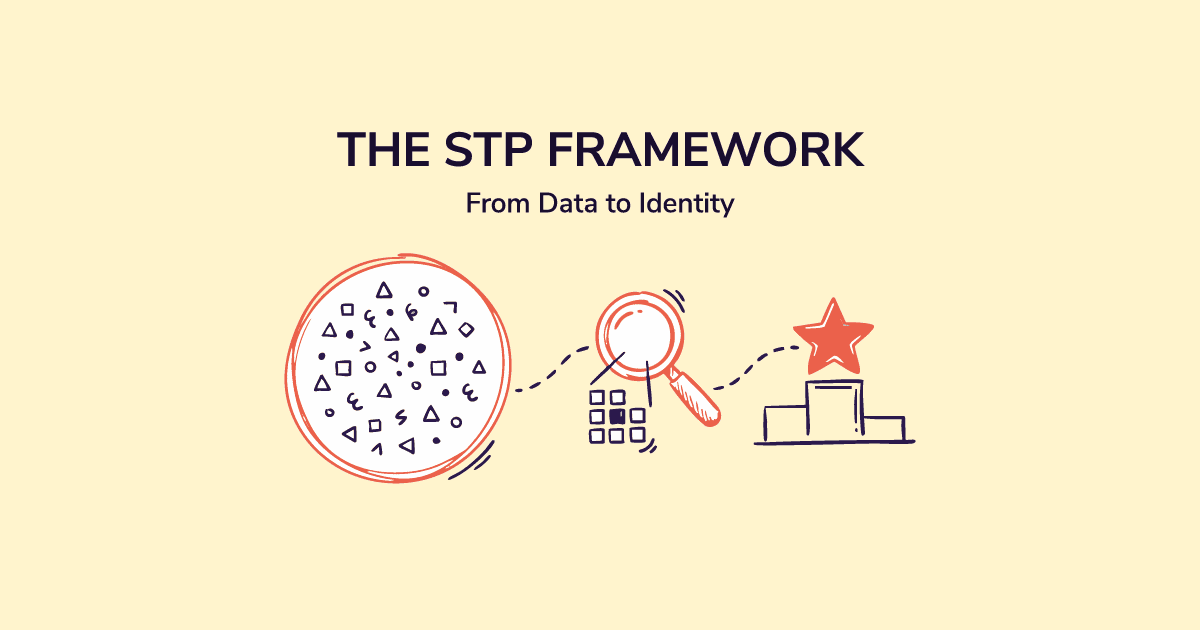
STP is an acronym that stands for Segmentation, Targeting, and Positioning. This is a three-part marketing process. It allows you to identify your ideal customers, select which segment should be pursued, and develop a positioning strategy for your product that resonates with them.
It sounds easy enough. However, implementing each step requires much more consideration than you probably give it.
In this manual, we will explain each phase in detail. You'll find out how segmentation is done, what a good target looks like, and what makes an effective positioning strategy.

SMARTe GTM Intelligence
Start Smarter Prospecting Today
Where STP Came From
STP is widely credited to Philip Kotler, who is often called the “father of marketing.” He introduced this concept in the 1960s. According to him, segmentation, targeting, and positioning are the “essence of strategic marketing.”
Before STP, businesses followed a product-driven approach. They first made a product and then tried to sell it to as many people as possible. The idea was simple: “cast a wide net to catch more fish.”
However, this approach did not work well. It used generic communication that did not connect with people. Most customers prefer messages that feel relevant to them.
This was one of Kotler’s key insights. He explained that marketing should start by understanding customer needs first. Then, businesses should create products and messages that match those needs.
That order of thinking changed marketing.
Stage 1 - Segmentation: Know Who You’re Dealing With
Segmentation refers to the process of splitting the total population into segments.
A segment refers to a group of people who have something in common. This can be their behavior, needs, or any other characteristic. The idea is to know your market well enough not to generalize anything about it.
This helps in numerous ways.
Let’s take a university. Universities offer educational experience to a wide variety of people. There are recent high school graduates, professionals who are upgrading their skills, foreign students, etc. All of them have totally different needs and expectations. One message for all will fail to connect.
That’s where segmentation comes in handy.
Four Common Methods of Market Segmentation
There are different methods of market segmentation. These depend on a firm’s product, industry type, and the information it has. Each method gives a different perspective on the customer base. Here are four of the most common segmentation strategies.
1. Geographic Segmentation
Geographic segmentation divides consumers based on their location. This can include countries, cities, regions, climates, or even neighborhoods. It is especially important when location affects customer preferences and demand.
A good example of this is Microsoft. Even though it operates globally, it adjusts its offerings based on regions. For example, its cloud services follow different data rules and pricing in different countries. This helps meet local needs and regulations.
2. Demographic Segmentation
The demographic approach separates people based on measurable criteria. These include age, gender, income, education level, occupation, household size, and many more. This approach is the most widely used because demographic information is easy to obtain and simple to understand.
A good B2B example is Salesforce. It markets different plans based on company size and budget. Large enterprises get advanced and expensive solutions. Small businesses get simpler and more affordable options. The company does not market the same product in the same way to every business.
Demographic information provides an excellent basis for market segmentation. However, there are inherent limitations to using solely demographic data. Two individuals with similar demographics could exhibit vastly different behaviors.
3. Psychographic Segmentation
Psychographic segmentation looks deeper than surface details. It is not just about age or income. It is about what people care about, how they see the world, and what drives their choices. You begin to understand why people buy, not just what they buy.
Take two people who are both 35 and earn the same salary. One cares about sustainability and buys only from ethical brands. The other cares about convenience and prefers high-end products. On paper, they look the same. In real life, they are very different. This is what psychographics reveal. It shows what basic data often misses.
Look at Patagonia as an example. They do not just target people who like the outdoors. They speak to people who feel responsible for the environment and want their purchases to match their values. This belief shows up everywhere. It is in their products, their ads, and even in bold campaigns that tell customers not to buy new items unless they really need them. This is psychographics shaping the strategy from start to finish.
4. Behavioral Segmentation
Behavioral segmentation looks at how people actually interact with a product or category. Purchase history, usage frequency, brand loyalty, and where someone is in the buying journey are all behavioral signals.
Starbucks does this well. Through their Rewards program, they track what customers order, how often they visit, and when they tend to buy. A first-time visitor gets one experience. A customer who visits daily gets another. The messaging, offers, and rewards are all shaped by actual behavior — not assumptions about who that person is.
Firmographic Segmentation: The B2B Layer
If you're marketing to businesses rather than consumers, there's a fifth type worth knowing: firmographic segmentation. Instead of individual demographics, you segment companies by industry, company size, annual revenue, headcount, or geography.
A software company might segment by company size (small businesses vs. enterprise). A logistics firm might segment by industry (retail vs. manufacturing). The principle is the same — group similar buyers together so you can speak to them with specificity.
What Makes a Segment Worth Using?
Not every group you identify is worth treating as a separate segment. A useful segment meets five criteria:
- Measurable — you can define it and estimate how many people are in it
- Substantial — it's large enough to justify the cost of targeting it separately
- Accessible — you can reach people in this segment through your marketing channels
- Differentiable — it's meaningfully different from your other segments in how it responds to marketing
- Actionable — your business can actually serve this group with what you have
If a segment fails any of these, it's probably not worth treating as a separate segment at all.
Stage 2 — Targeting: Choosing Where to Focus
Once you've identified your segments, targeting is the step where you decide which of them to actually go after.
This doesn't mean ignoring everyone else forever. It means making a deliberate choice about where to focus your energy and budget right now. You can't do everything at once. Targeting forces you to prioritize.
How to Evaluate Segments
When comparing segments, these are the questions worth asking:
- How large is this segment today, and how much will it grow?
- How profitable are customers in this segment likely to be?
- How easy is it to reach them through your channels?
- How fierce is the competition already serving them?
- Does this segment align with your business's strengths and resources?
The answers will differ for every business. A small startup with limited resources might focus on a tight niche where it can beat larger competitors. A large established brand might spread across multiple segments at once.
The Three Targeting Strategies
Once you've evaluated your segments, you need to decide how to approach them. There's no universal right answer — the best strategy depends on your resources, your product, and where you are in your growth. Here are the three broad approaches every marketer should know.
Undifferentiated Marketing (Mass Marketing)
Undifferentiated marketing means you treat the whole market as one audience. You send the same message to everyone.
This works for products that almost everyone needs and where differences between people don't matter much. Basic commodities like sugar, petrol, or standard electricity plans. There's little point crafting different messages for different groups when the product is essentially identical for all.
The downside is that generic messages rarely create strong emotional connections. You get reach. But not resonance.
Differentiated Marketing
Differentiated marketing means choosing a few specific groups and giving each one its own message or even its own product.
Look at Toyota. They do not build one car and hope it fits everyone. Instead, there is the Corolla for people who want something affordable, the Prius for those who care about the environment, and the Land Cruiser for people who enjoy off-road travel. Each model speaks to a different group, and the marketing matches that.
This strategy needs more time, effort, and money. Teams have to manage many campaigns and sometimes different product lines. But for companies that can handle it, the reward is better relevance, and that often leads to better results.
Concentrated Marketing (Niche Marketing)
Concentrated marketing focuses on one specific group and gives it full attention. Instead of trying to reach everyone, you aim to become the top choice for a certain type of customer.
Take Rolex. They are not trying to reach everyone who needs a watch. They speak to people who want a symbol of success and quality. Look at LUSH as well. They do not target every beauty shopper. They attract people who care about ethical ingredients and animal welfare. These are people who value those things highly.
This clear focus makes their marketing stronger and their message easy to understand.
For smaller businesses or those entering a crowded market, this approach often works best. You may not beat big brands in spending, but you can win by staying focused.
Expert Tip: Start Narrow, Then Expand
One of the most common targeting mistakes is going too broad too soon. It feels like you're capturing more opportunity. In reality, it dilutes your message and burns budget on people who aren't a genuine fit.
Most successful companies started with a tight focus and built from there. Facebook started as a tool for Harvard students. Amazon started selling only books. Airbnb started in San Francisco. They built real strength in one segment before expanding.
Start where you can genuinely win. Expand from that position of strength, not from a position of weakness spread too thin.
Stage 3 — Positioning: The Battle for the Customer's Mind
Positioning is the third step of STP. It's also the most misunderstood.
Positioning is not about what your product does. It's about how your target customer perceives your product compared to every other option they have. That includes direct competitors, indirect alternatives, and doing nothing at all.
Here's the important part: you don't fully control your positioning. Your customer's mind does. You influence it through everything you put out into the world — your messaging, your design, your pricing, your partnerships, your customer service. All of it sends signals. Positioning is the cumulative impression those signals create.
Al Ries and Jack Trout, two of the most respected thinkers in brand strategy, made this point decades ago in their landmark book Positioning. The battle is won or lost in the customer's mind, not in the marketplace. A product doesn't win because it's objectively better. It wins because it occupies the right mental slot in the right person's head.
Common Positioning Approaches
There's no single right way to position a product. The best approach depends on your market, your strengths, and the gaps your competitors have left open. Here are the most effective positioning strategies, each suited to a different situation.
By Attribute or Benefit
You lead with what your product does better than anyone else. "The toothpaste dentists recommend most." "The laptop with the longest battery life." You pick one key attribute and own it completely.
By Price and Quality
You place yourself clearly on the price-quality spectrum. Walmart positions on value and affordability. Whole Foods positions on quality and health. Both are consistent and clear. Both attract very different buyers. Neither is confused about where they stand.
By Use or Application
You narrow the context. "The energy drink for gamers." "The project management tool for design teams." This works well when the general market is crowded but a specific use case is underserved.
By User Identity
You define your product by who it's for. "For serious runners." "For first-time investors." This is identity-based positioning. The customer sees themselves in the message and feels the product was made specifically for them.
By Competitor
You position relative to a known rival. "The affordable alternative to [market leader]." This is risky if done carelessly, but effective when there's a clear, honest difference to highlight.
How to Write a Positioning Statement
A positioning statement is an internal tool. You won't put it on a billboard. But it's the anchor that keeps all your messaging consistent across every touchpoint.
A good positioning statement answers four things:
- Who is your target customer?
- What category does your product belong to?
- What's the most important benefit your product delivers to that customer?
- Why should they believe it?
A simple format that works:
"For [target customer], [product name] is the [category] that [key benefit] because [reason to believe]."
Here's an example made concrete:
"For small business owners overwhelmed by bookkeeping, FreshBooks is the accounting software that makes financial admin simple because it's designed for people who aren't accountants."
Short. Specific. Customer-focused. And it makes a clear promise the brand can actually keep.
The Positioning Map
One of the most useful tools for understanding where to position yourself is a positioning map, also called a perceptual map.
It's a simple diagram with two axes. Each axis represents an attribute that matters to your customers. Common pairings include price vs. quality, traditional vs. modern, or premium vs. accessible.
You then plot your brand and your key competitors on the map based on how customers actually perceive each one. Not how you think they're perceived. How customers describe them.
The result is a visual snapshot of the competitive landscape. You can see which positions are crowded and which positions have breathing room.
For example: plot coffee brands on a map with "price" on one axis and "sustainability focus" on the other. You'd likely find some brands clustered at high price and high sustainability. Others at low price with little sustainability focus. There might be a gap in the middle — or at a corner no one has occupied.
A gap isn't automatically an opportunity. You have to ask: is there real demand in that gap? Is it profitable? Can you credibly occupy it? But the map helps you think clearly about the competitive space and where you might have an opening.
A Complete STP Example: Plant-Based Protein Brand
Let's walk through all three stages together using a realistic scenario.
The company: A startup launching a premium plant-based protein powder.
Segmentation
They look at the broader protein supplement market and identify several distinct groups:
- Competitive athletes focused on performance and muscle gain
- Gym-goers focused on weight management
- Health-conscious consumers avoiding animal products for lifestyle reasons
- People with lactose intolerance who need dairy-free alternatives
- Environmentally conscious buyers who choose plant-based products for ethical reasons
Each group has different priorities. A competitive athlete cares about protein per gram and amino acid profiles. Someone avoiding animal products for ethical reasons cares about where the ingredients come from. These are not the same person, and the same message won't reach both of them well.
Targeting
The startup evaluates each segment. Competitive athletes are a large market, but it's dominated by established brands with decades of trust and enormous budgets. Gym-goers focused on weight loss are even larger — and even more crowded.
Then they look more closely at environmentally conscious buyers. This group is growing fast. They're willing to pay a premium for brands that share their values. And no major protein brand is speaking directly to their ethical concerns — most are still leading with performance claims.
The startup chooses this segment as their primary focus.
Positioning
With the target segment clear, they build their positioning around it.
Their messaging doesn't lead with protein content or muscle-building claims. It leads with their environmental credentials: low carbon footprint, sustainable packaging, ethically sourced ingredients. The brand feels like it belongs at a farmers market, not a supplement store.
Their positioning: "The plant-based protein for people who care where their food comes from."
The market leader in protein powders positions on performance. The startup doesn't compete with them on that axis at all. They choose a different axis — values and ethics — and own it. Different position. Different audience. No head-on collision with a much larger competitor.
The Most Common STP Mistakes
Relying on demographics alone
Age and income tell you who someone is on paper. They don't tell you what they care about or why they make decisions. Two people of the same age and income can behave completely differently. Always add psychographic and behavioral data to your segmentation.
Targeting too many segments at once
Trying to serve four different segments with four different messages — especially early on — splits your attention and dilutes everything. You end up with campaigns that are vaguely relevant to everyone and deeply relevant to no one. Start with one or two segments you can genuinely win. Expand when you're ready.
Confusing internal intent with customer perception
You might believe your brand stands for innovation. Your customers might see it as complicated. That gap is a serious positioning problem. The only positioning that matters is what exists in the customer's mind. If you don't know how customers currently perceive you, find out before you try to change anything.
Copying your competitor's position
If the market leader is positioned as the "affordable" option, positioning yourself as "affordable" too doesn't help you. You just become a weaker version of them. Find the attribute on which you can genuinely win — one they're not already dominating.
Treating positioning as a one-time exercise
Markets shift. Competitors move. Customer needs evolve. Your positioning needs regular review. What was a compelling position five years ago might now be crowded, outdated, or simply irrelevant. Strong brands revisit their positioning every year or two and make adjustments as needed.
Why STP Actually Matters
Most people treat STP as a box to tick in a marketing plan. It becomes a slide in a deck, gets presented once, and then gets forgotten.
That's a significant waste.
STP done properly is the foundation of every marketing decision you make. It tells you which customers are worth acquiring. It tells you what to say and how to say it. It tells you which channels make sense and which don't. It shapes your pricing, your partnerships, and your product roadmap.
But more than any of that — it forces a discipline that most businesses actively resist.
The discipline of saying no.
No to customers who aren't a real fit. No to channels that don't reach your actual segment. No to messages that feel good internally but don't connect with the people you're trying to reach.
That discipline, applied consistently, is what builds a brand that people actually remember. Not because you shouted at everyone. Because you said exactly the right thing to exactly the right person.
That's the whole point of STP. And it's worth taking seriously.