TL;DR:
Quick summary: First-party intent data comes from actions people take on your own website, product, or CRM. Third-party intent data comes from a provider that tracks research activity across sites you don't own, like trade publications or review platforms. First-party data is accurate but only covers people who already found you. Third-party data covers far more of the market but needs a fit filter before a rep acts on it.
- First-party intent data: pricing page visits, demo requests, trial activity, gated content downloads
- Third-party intent data: content consumption tracked by a provider like Bombora across a publisher network
- Second-party intent data: review-site behavior from platforms like G2, shared back with vendors
- Zero-party intent data: preferences a buyer tells you directly, through a survey or intake form
- The strongest GTM programs use more than one type, filtered by ideal customer profile fit
Why the First-Party vs Third-Party Distinction Matters
A director of demand gen I talked to last year had a simple rule: never act on a single intent signal alone. Her team got burned once. A third-party "surge" turned out to be one procurement analyst doing competitive research for an unrelated deal, not a live buying opportunity.
That's a common failure mode. First-party intent data and third-party intent data measure two different things. They're collected differently, and they carry different blind spots. Treating them as interchangeable is how a promising account list turns into a pile of dead-end calls.
Here's what separates the two, where second-party and zero-party data fit in, and how experienced GTM teams combine all of it without burying reps in noise.
What Counts as B2B Intent Data
Intent data is behavioral. It's not a company's size, industry, or job titles (that's firmographic and contact data). Intent data tracks what a person or account does: which pages they read, which topics they research, which solutions they compare.
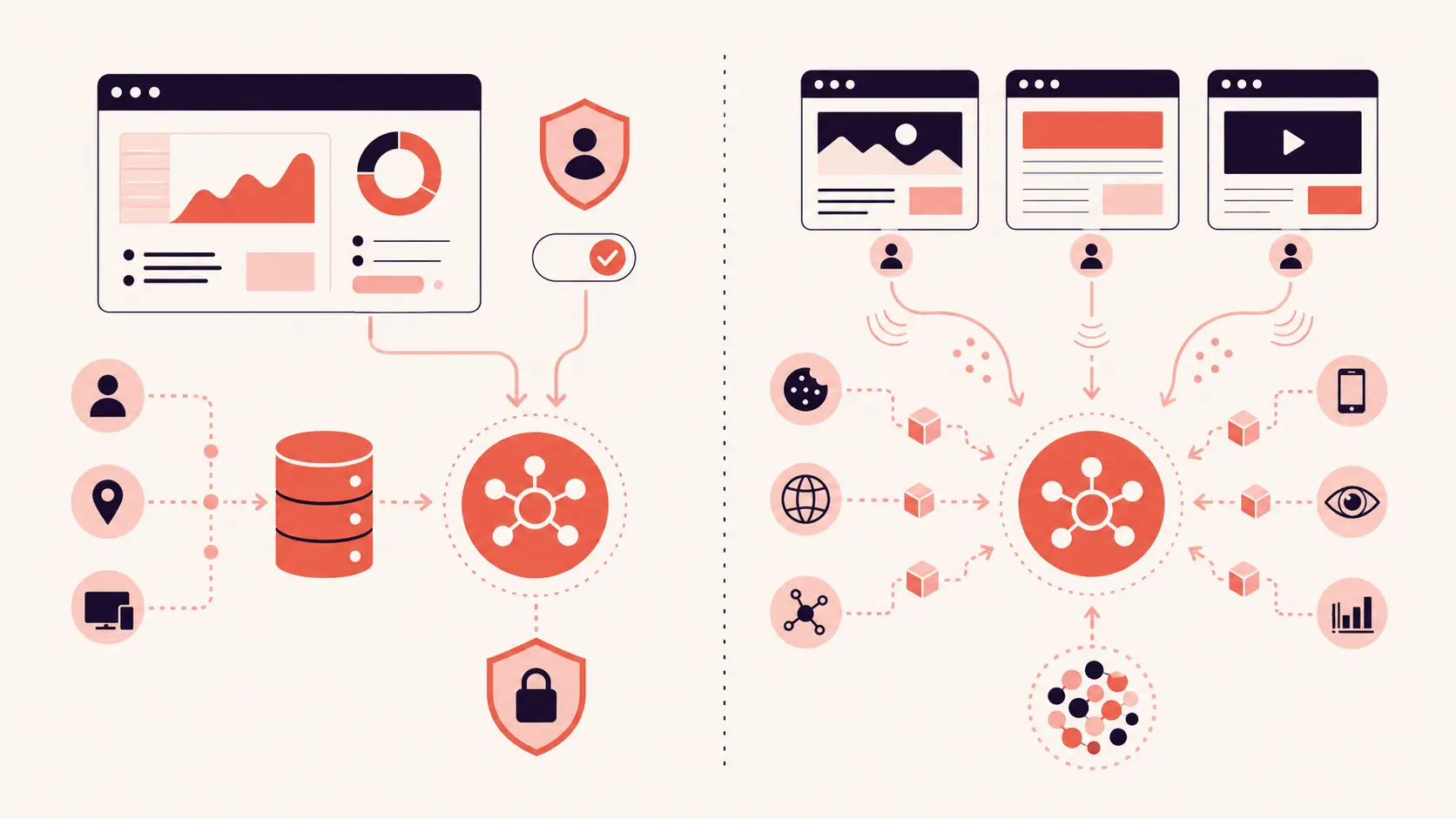
B2B teams sort intent data into four buckets, based on who collected it:
- Zero-party data. The buyer tells you directly (a survey response, a stated preference).
- First-party data. You observe it on your own properties (a pricing page visit, a demo request).
- Second-party data. A partner or platform collects it and shares it with you (a review site sharing buyer activity with a vendor).
- Third-party data. An outside provider aggregates it from sources neither of you owns (a publisher network tracking content consumption).
A lot of conversations about "intent data" jump straight to first-party versus third-party and skip the other two. That's a mistake. Second-party sources like G2 sit in a specific, useful middle ground. And zero-party data is often the clearest signal a team has.
First-Party Intent Data: What It Is and Where It Comes From
First-party intent data is anything you collect directly, on properties you control. If it happened on your website, in your product, or inside your CRM, it's first-party.
Examples of First-Party Intent Data
- Pricing page visits and repeat page views
- Demo or trial requests
- Free trial or sandbox product usage
- Gated content downloads (ebooks, reports, templates)
- Email opens and click-throughs inside your own marketing platform
- Chat conversations and support tickets
Where First-Party Data Falls Short
I think first-party intent data is an underused asset a lot of B2B teams already own. A visitor spends four minutes on the pricing page, and nobody on the sales team ever finds out (I've seen this happen more times than I'd like to admit).
The real limit isn't quality. It's reach. First-party data only sees people who already found your website. Say a target account is comparing you against a competitor on G2. Or reading an analyst report. You have zero visibility into any of it.
For a lot of B2B companies, the accounts who already know you are a small slice of the total market. That's exactly the gap third-party data exists to close.
Third-Party Intent Data: What It Is and Where It Comes From
Third-party intent data comes from a provider with no direct relationship to your company or the buyer. The provider partners with a network of publisher sites, ad networks, or content platforms. It then aggregates anonymized research activity across that network.
Bombora intent data is the name a lot of B2B marketers know here. It runs a "co-op" model: a network of business and trade sites that share anonymized content consumption data, which Bombora aggregates into account-level topic scores.
Examples of Third-Party Intent Data
- Reading multiple articles on a specific topic across trade publications
- Downloading an analyst report tied to a product category
- Watching a category-relevant webinar hosted by a third party
- Researching a competitor's product on an external site
Where Third-Party Data Falls Short
Third-party signals are almost always account-level, not person-level. You'll learn that "someone at Acme Corp" showed research activity. You won't know if that someone owns the budget or is an intern pulling together a slide.
A single article read doesn't confirm buying intent either. It might mean genuine research. It might mean one employee got curious for ten minutes and moved on. That's the noise problem every third-party intent data provider has to manage, and it's why filtering matters more than the raw signal itself.
Second-Party Intent Data: The Type Guides Often Skip
Second-party intent data sits between first and third. A platform collects behavioral data directly from its own users. That makes it first-party to that platform. The platform then shares it with vendors as part of a paid relationship or partnership.
The clearest B2B example is G2 intent data. Say a buyer researches your category, compares you against competitors, or reads reviews on G2. That activity is first-party to G2. Once it reaches you, it's second-party. G2 itself describes its own Buyer Intent product this way: first-party to G2, second-party to the vendor using it.
Second-party signals tend to sit later in the funnel than a typical third-party surge. Someone actively comparing vendors on a review site is closer to a decision than someone who read one blog post. The tradeoff: this only works in categories with real review coverage. Thin activity on G2 or TrustRadius means thin signal.
Zero-Party Intent Data: The Highest-Consent Signal
Zero-party data is what a buyer tells you on purpose. A qualification form where someone selects their biggest challenge. A product tour where they choose which features to see first. A self-reported budget range.
The distinction is simple: the buyer volunteers zero-party data, while you observe first-party data yourself. If a prospect says "I'm evaluating this because our current tool doesn't handle mobile coverage," that's zero-party. If you notice they visited the mobile-coverage feature page three times, that's first-party.
Zero-party data carries high trust because you don't have to infer anything. The limitation is scale. A lot of buyers won't fill out a detailed intake form before they're ready to talk to sales.
First-Party vs Third-Party Intent Data: Side-by-Side Comparison
Do Privacy Rules Like GDPR and CCPA Affect Third-Party Intent Data
Short answer: it depends on the provider, not the data type itself. This is where a lot of GTM teams get confused, so it's worth breaking apart.
Third-Party Cookies Are Not Third-Party Intent Data
These two things get lumped together constantly, and they're not the same. Third-party cookies are browser tracking files used for ad retargeting across the open web. Browsers have been cracking down on them for years. Firefox and Safari now block them outright.
Third-party intent data works differently. It comes from content engagement inside a publisher co-op. Each publisher's own privacy policy governs that data, not a cookie chasing a user across the internet.
G2's own signals come from its owned marketplace, not cross-site cookie tracking. G2 has made this point publicly about its Buyer Intent product: cookie deprecation simply doesn't touch it.
That's a real nuance worth knowing. Cookie deprecation is a real shift in ad tech. It isn't the end of B2B intent data.
Questions to Ask an Intent Data Vendor About Compliance
Compliance still matters, just in a different place. Before signing with any third-party intent data provider, ask:
- Where does the underlying data come from, specifically?
- How is consent handled at the publisher level?
- What's the data retention and deletion policy?
- Can they document alignment with GDPR rules for cold calling if you're targeting EU accounts?
- Can they document CCPA compliance requirements for California residents?
If a vendor can't answer these clearly and quickly, that's a signal on its own.
Why One Data Source Is Never Enough
Here's a number that changes how a lot of teams think about intent data. Forrester's 2026 buyer research puts the typical B2B buying decision at 13 internal stakeholders plus nine external influencers. That number climbs for larger or more strategic purchases.
Your own CRM probably has a relationship with two or three of those people, if you're lucky. A single intent signal, first-party or third-party, almost never reflects what the full committee thinks. It reflects what one person did on one day.
That's the real argument for combining sources instead of picking one. Chasing every topic surge without a fit filter leads straight into what researchers call the B2B dark funnel. That's the layer of buyer research that never touches your website or your CRM at all. A lot of what gets marketed as buying signals worth tracking is really account-level noise until you know which person on the committee is paying attention.
How to Combine First-Party and Third-Party Intent Data
Here's the framework I'd use, in order.
- Start with ideal customer profile fit. Know your ICP before you look at a single signal. Intent activity from an account that doesn't fit your ICP is a distraction, not a lead.
- Layer first-party signals as your confidence check. An ICP-fit account visiting your pricing page twice this month is a real buying trigger worth acting on. That deserves same-day follow-up.
- Use third-party signals to widen the net. This is where intent-based marketing campaigns earn their keep, nurturing ICP-fit accounts that haven't visited your site yet.
- Add a trigger layer. Funding announcements, leadership changes, and tracking job changes for champions who moved companies all add context a raw topic score can't give you.
- Map the buying group before anyone calls. Understanding the b2b buying group at a target account matters more than the intent score itself. A surge tells you a company is curious. It doesn't tell you who to call.
How to Choose a Third-Party Intent Data Provider
Not all providers source or process data the same way. A few questions separate a truly useful vendor from an expensive noise generator.
- How is the data collected? Publisher co-op, proprietary panel, or a mix?
- How often does it refresh? Weekly beats monthly, and monthly beats quarterly.
- Is the signal person-level or account-level? The bulk of third-party intent is account-level. Ask how they handle that gap.
- How do they define a "surge"? A single article read and a multi-week research pattern are not the same signal.
- Can they integrate with your existing contact and CRM data? A topic score with no path to a verified, dialable contact isn't actionable on its own.
Our full breakdown of intent data providers goes deeper on pricing models and coverage. They vary more than typical sales decks let on.
Common Mistakes B2B Teams Make With Intent Data
- Acting on a single article read. One page view is curiosity, not a buying signal.
- Skipping the ICP filter. High intent from a poor-fit account still isn't a lead.
- Treating account-level data as person-level. Knowing a company is "in market" doesn't tell you who to call.
- Skipping the vendor's compliance paperwork. Pricing gets scrutinized. Data sourcing rarely does.
- Relying on one data type. First-party alone misses the market. Third-party alone drowns reps in unqualified surges.
Where SMARTe Fits Into Your Intent Data Stack
Here's the honest pitch, and I'll keep it specific instead of generic.
SMARTe runs native Bombora intent data inside the same platform as its 289M+ verified B2B contacts and 66M+ company profiles. That matters because deals stall in the exact gap this article has been describing: the space between "this account is showing intent" and "here's who to call." A topic surge on its own is an account-level guess. Pair it with a verified, direct-dial contact, and it becomes a real call a rep can make today.
SMARTe's coverage runs 75%+ US mobile and 50%+ global direct dial. An intent signal on an account outside North America doesn't hit a dead end the way it can with US-heavy providers. The platform is SOC 2 Type II certified, GDPR-aligned, and CCPA compliant, which covers the vendor compliance questions this article walked through earlier.
If you're already running Bombora intent inside SMARTe, here's the workflow. A topic surge flags an account. SMARTe checks it against your ICP filters. If it's a fit, you get a verified contact with a mobile number attached, not just a company name and a guess. Try SMARTe free, no credit card required, and see how the intent-to-contact handoff works with your own account list.