I’ve spent years building and scaling go-to-market teams. If there is one hard truth I’ve learned about outbound sales, it’s that bad data kills good strategy.
For a long time, DiscoverOrg was the undisputed heavyweight of B2B contact data. It had the cleanest org charts and the best IT contacts. But things change. DiscoverOrg was absorbed into ZoomInfo. While the combined platform is massively powerful, it has also become incredibly expensive, rigid, and heavy.
I talk to revenue leaders every week who are frustrated. They are tired of paying for bundled features they don’t use. They hate the strict, seat-based licensing. And they often find that outside of North America, the data quality drops off a cliff.
That is why the search for viable DiscoverOrg alternatives has exploded. Teams want accurate mobile numbers, flexible pricing, and tools that actually fit their daily workflows without requiring a massive upfront contract.
I’ve tested, bought, and ripped out more sales intelligence tools than I can count.
Below is my honest breakdown of the 13 tools actually worth your time in 2026 👇
1. SMARTe

SMARTe is one of the best DiscoverOrg alternatives for modern GTM teams. While DiscoverOrg (now part of ZoomInfo) is expensive and rigid, SMARTe offers accurate, flexible, and globally compliant sales intelligence. It helps sales and marketing teams prospect faster, enrich leads in real time, and connect directly with decision-makers.
Top Features
- 281M+ B2B contacts and 65M+ company profiles
- 59K+ tracked technologies for advanced targeting
- 70% mobile number coverage in North America and 50% across EMEA, APAC, and LATAM
- Real-time data enrichment to fix incomplete or outdated records
- Job change alerts to follow champions and reduce churn risk
- Advanced search filters like company size, revenue, SIC, industry, and seniority
- Browser extension to reveal contacts from LinkedIn and company websites
- CRM integrations with Salesforce, HubSpot, and more in just a few clicks
- 55+ firmographic and technographic attributes for ad targeting and segmentation
Pros
The biggest advantage is the data accuracy outside the US. Most databases fall apart in Europe and Asia, but SMARTe holds up. The browser extension is incredibly fast for pulling contacts directly from LinkedIn.
Cons
It is purely focused on data and enrichment. If you are looking for an all-in-one tool that also includes a built-in auto-dialer and email sequencer, you will need to pair SMARTe with a dedicated sales engagement platform.
SMARTe Pricing
SMARTe keeps pricing simple and transparent. It works on a credit-based model with unlimited users and no license fees. You only pay for what you use.
- Free Plan – $0 with 10 monthly credits. No card required.
- Pro Plan – $25 per month for 50 credits ($0.50 per credit).
- Enterprise Plan – Starts at $15,000 per year. Credits drop to $0.30 each, and as low as $0.20 at 1M credits. Custom deals can bring the cost even lower.
This makes SMARTe cost-effective for SMBs and scalable for enterprises. Unlike DiscoverOrg’s complex pricing, SMARTe is straightforward and predictable.

SMARTe GTM Intelligence
Start Smarter Prospecting Today
SMARTe vs DiscoverOrg
SMARTe is perfect for both enterprises and SMBs. DiscoverOrg struggles with data accuracy, while SMARTe refreshes records in real time. That makes it a stronger DiscoverOrg alternative for global teams. SMARTe covers Europe, APAC, and LATAM with high accuracy. DiscoverOrg often feels limited outside the US.
Pricing is another big difference. DiscoverOrg has complicated license and seat costs that add up fast. SMARTe does not charge for licenses or seats. It works on a simple credit-based model. You pay only for what you use, and you get unlimited users.
SMARTe also gives higher mobile number availability. This helps sales teams reach decision-makers directly. CRM integration is smooth and fast. DiscoverOrg feels heavy and enterprise-only. SMARTe scales with you, no matter your team size.
If SMARTe solves the global data and pricing puzzle, the next tool on our list leans heavily into European data privacy laws.
2. Cognism

Cognism is a global sales intelligence tool with a clear focus on data quality. It provides GDPR and CCPA aligned B2B data with strong coverage in EMEA and North America. Cognism also promotes phone-verified mobile numbers and its Diamond Data set for better connect rates. If you want a DiscoverOrg alternative that emphasizes accurate mobile numbers and compliant data, Cognism deserves a close look.
Top features
- Sales Companion for quick, in-workflows insights
- Phone-verified mobile numbers and Diamond Data for higher pick-up rates
- AI Search with natural language prompts to find ICP accounts and contacts
- Instant and scheduled CRM enrichment
- CSV enrichment on demand
- Intent data via Bombora
- International coverage across EMEA, NAM, and APAC
- Easy setup and fast support
- Integrations with major CRMs and sales engagement tools
- Data checked against DNC lists and aligned with GDPR and CCPA
Pros
Their GDPR compliance is best-in-class. If your legal team is nervous about cold calling in Germany or the UK, Cognism makes them comfortable. The Diamond Data genuinely improves dial-to-connect ratios.
Cons
It is a premium product with a premium price tag. The setup and onboarding can also feel a bit heavy for very small, scrappy teams looking to move fast.
Pricing
Cognism offers tiered packages. Plans such as Grow and Elevate include different add-ons like Signals. Pricing is quote-based. You can request a demo and test data before buying.
Cognism vs DiscoverOrg
DiscoverOrg, now ZoomInfo, is known for large coverage and many add-ons. But it often uses a credit model and may restrict exports by plan. Cognism positions itself as a discoverorg competitor that aims to remove export stress and connect reps to more mobile numbers in key regions like EMEA. If you care about compliant data, mobile accuracy, and faster dial-to-connect, Cognism is a strong pick among ZoomInfo alternatives.
Moving away from direct dials for a moment, let's look at a tool built for the RevOps and legal teams that need to understand corporate risk.
3. D&B Hoovers
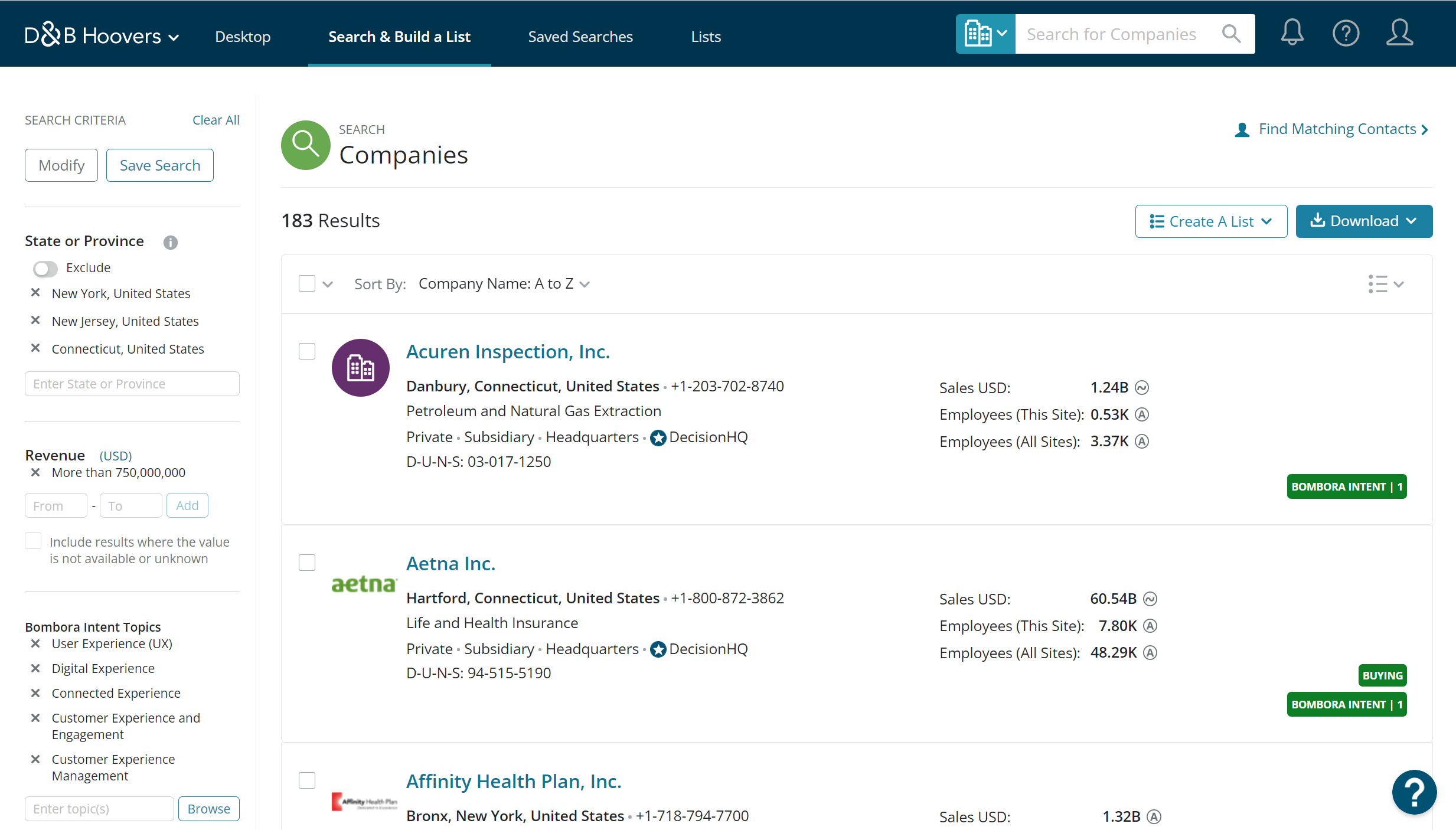
D&B Hoovers builds on Dun & Bradstreet’s massive Data Cloud. It blends firmographics, risk signals, and sales insights. Many revenue teams use it to size markets, screen accounts, and qualify fit and risk, especially for enterprise selling. If you want a DiscoverOrg alternative with deep business identity data and risk analytics, D&B Hoovers stands out.
Top features
- Custom lead list building with robust firmographic filters
- Risk management analytics tied to the D&B Data Cloud
- Intent and buying signals to time outreach
- Company family trees and hierarchy views
- Data stewardship and enrichment workflows
- Integrations with major CRMs and MAPs
- Global company coverage and data lineage
- Team administration and governance controls
- Prospecting workflows for account planning
- Scoring inputs for ICP fit and segmentation
Pros
No one beats D&B when it comes to understanding who owns whom in the corporate world. It is exceptional for enterprise territory carving and risk management.
Cons
The user interface feels dated. SDRs usually hate using it because finding a simple, accurate mobile number is much harder here than in modern prospecting tools.
Pricing
Pricing is not public. You need to request a quote from D&B Hoovers. This is common for enterprise tools in this category.
D&B Hoovers vs DiscoverOrg
Think of D&B Hoovers as a DiscoverOrg competitor with stronger risk data and legal entity clarity. DiscoverOrg is often chosen for contact-level depth and go-to-market add-ons. D&B Hoovers is often picked by teams that need enterprise-grade identity resolution, hierarchy mapping, and risk insights for account selection and compliance.
If D&B Hoovers is for the massive enterprise, this next tool is built for the lean team that just wants clear pricing and a clean interface.
4. UpLead

UpLead is a user-friendly B2B contact database and enrichment tool. It is a solid DiscoverOrg alternative for small to mid-teams that want a clean interface, filters that make sense, and transparent entry-level pricing. It supports technographics, intent, Chrome extension, and enrichment.
Top features
- Target by job title, location, company size, and industry
- Data enrichment to clean and append records
- Technographics for tech-stack targeting
- Intent data to prioritize warm accounts
- Chrome extension for quick prospecting
- Email verification to reduce bounces
- List building and saved searches
- CSV export and light enrichment
- Integrations with major CRMs
- Credit-based data access with clear tiers
Pros
The interface is a breath of fresh air. It is incredibly easy to use, and their commitment to a 95% data accuracy guarantee gives reps confidence.
Cons
The database size is noticeably smaller than the enterprise giants. You will sometimes run dry on niche searches or outside of core North American markets.
Pricing
UpLead shows published tiers like Essential, Plus, and Professional. Plans differ by credits and features. Multi-user options are available. Check the pricing page for current details.
UpLead vs DiscoverOrg
UpLead is often cheaper and simpler to roll out. DiscoverOrg offers wide coverage and many add-ons but can feel heavy for lean teams. UpLead is a good discoverorg competitor if you want a clean tool, published pricing, and focused prospecting without a complex contract.
👉 Thinking about UpLead competitors? Explore the best alternative to UpLead.
What if you don't want your reps leaving their CRM to find data at all? That is where HubSpot's latest move comes into play.
5. Breeze Intelligence by HubSpot (formerly Clearbit)
HubSpot acquired Clearbit and introduced Breeze Intelligence to bring enrichment, research, and AI-assisted workflows inside HubSpot. If your go-to-market team runs on HubSpot, Breeze is a logical discover org alternative because it reduces switching costs and uses Clearbit tech under the hood.
Top features
- AI research to prep for calls and meetings
- Company and contact enrichment powered by Clearbit tech
- Credit pack model for predictable usage
- Native HubSpot CRM experience to shorten forms and route leads
- Signals to spot fit and timing
- Lead scoring inputs from enrichment fields
- Tailored outreach powered by firmographic and technographic data
- Simple admin with credits visible in HubSpot
- Workflows and automation using enriched fields
- Built-in compliance and governance in your CRM
Pros
The workflow friction is zero. Because it is native to HubSpot, marketing and sales teams are looking at the exact same data without manual syncing errors.
Cons
It only makes sense if you are deeply committed to HubSpot. If you use Salesforce or another CRM, this tool is irrelevant to you.
Pricing
Breeze Intelligence uses HubSpot Credits. Packs come in sizes like 100, 1,000, and 10,000. Your team consumes credits when enrichment or AI actions run.
Breeze Intelligence vs DiscoverOrg
DiscoverOrg lives as a separate platform with many add-ons. Breeze brings enrichment and AI research inside HubSpot, which removes friction for HubSpot-first teams. If your top need is clean, enriched data with native CRM automation, Breeze is a smart discover org alternative.
Sometimes you don't just need a name; you need a reason to call. This next platform is the gold standard for finding that reason.
6. Crunchbase
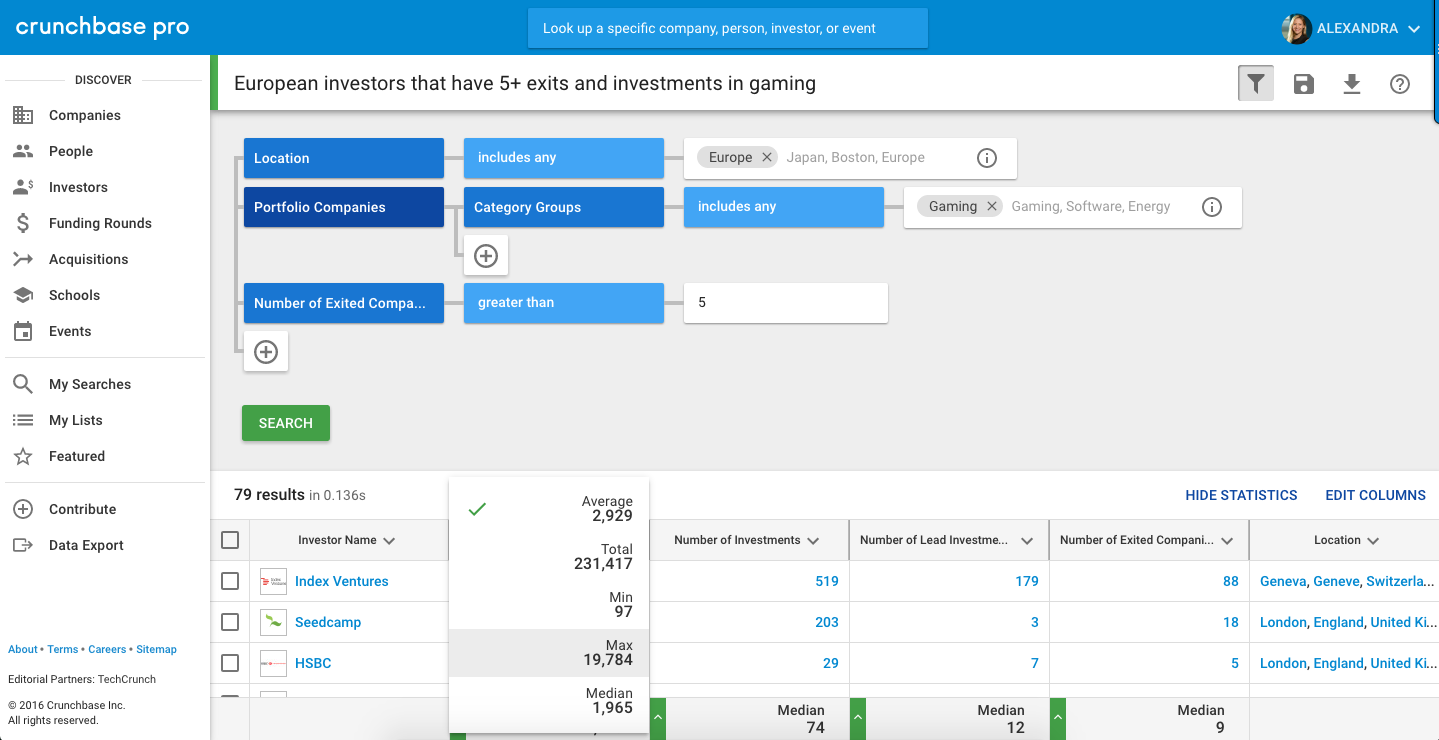
Crunchbase focuses on growth signals like funding, leadership moves, and web activity. It is a popular choice for teams that prioritize investor data and public company updates to time outreach. If you need a discoverorg competitor that helps you find fast-growing accounts, Crunchbase fits well.
Top features
- Growth insights such as funding rounds and investors
- Saved searches and list updates
- Company profiles and signals to spot buying windows
- Prospecting lists with filters for size and industry
- Notes and tagging to organize accounts
- Integrations with CRMs and sales tools
- API access for enrichment and workflows
- Alerts for new signals and changes
- Team seats and admin controls
- Basic technographics and web presence data
Pros
Timing is everything in sales. Calling an account the week they secure $20M in funding is a massive advantage, and Crunchbase serves this data up better than anyone.
Cons
The contact data itself is weak. Most teams use Crunchbase to find the target company, and then use another tool to actually find the buyer's phone number.
Pricing
Crunchbase offers Pro, Business, and API plans. Each plan unlocks different features and usage. Pricing details are on the Crunchbase site.
Crunchbase vs DiscoverOrg
DiscoverOrg centers on contact coverage and B2B direct dials. Crunchbase leans into growth signals and investor data. Many teams run Crunchbase alongside another database to time outreach. If your ICP cares about funding and market momentum, Crunchbase is a practical discover org alternative or add-on.
If your reps spend 90% of their day on LinkedIn, the heavy enterprise platforms are often overkill. You need something built for speed.
7. Kaspr
Kaspr is a lightweight B2B contact tool built for speed. It shines for LinkedIn prospecting, quick contact reveal, and easy enrichment for SMB and mid-market teams. If you want a discoverorg competitor with a generous free tier and simple UX, Kaspr is worth testing.
Top features
- Free version to get started fast
- Chrome extension for LinkedIn search, groups, and events
- Enrich contacts and companies from LinkedIn results
- Email and mobile reveal with quick list building
- Integrations with HubSpot, Pipedrive, Lemlist, Salesforce, and more
- Team analytics to track usage
- Lists and notes to organize outreach
- GDPR and CCPA alignment language on site
- Coverage across the US, Europe, and APAC
- Request-based data where needed for fresh results
Pros
It is incredibly fast and intuitive. Reps don't need training to use Kaspr; they just click a button on LinkedIn and get the data.
Cons
It relies heavily on individual, manual prospecting. It is not built for running massive, 10,000-contact territory list pulls like the bigger platforms.
Pricing
Kaspr lists Free, Starter, Business, and Organization plans. You can sign up without a credit card, then scale as you need more credits.
Kaspr vs DiscoverOrg
DiscoverOrg focuses on large coverage and enterprise features. Kaspr focuses on speed and LinkedIn workflows for individual contributors and small teams. If your team lives in LinkedIn and needs quick contact discovery with simple pricing, Kaspr is a clean discover org alternative.
Sticking with tools that are easy to adopt, this next platform has been a staple for SDRs for years.
8. Lusha

Lusha is a popular B2B contact database with a friendly UI and clear pricing tiers. Many teams use it to build cold call lists and export basic prospecting data. If you need a discoverorg competitor with a low barrier to entry and fast setup, Lusha fits the bill.
Top features
- Prospecting with essential filters like title, company, and location
- Email sequence tools for simple outbound
- CSV enrichment to clean contact lists
- Team analytics for adoption tracking
- Chrome extension for quick lookup
- Integrations with top CRMs
- Admin tools for credits and seats
- Basic intent signals on higher tiers
- Contact accuracy feedback loop
- Compliance resources and guidelines on site
Pros
The learning curve is virtually zero. It is one of the easiest platforms to deploy to a team of junior SDRs and have them dialing within the hour.
Cons
The pricing can get sneaky. It starts cheap, but as you scale users and credit needs, it gets expensive fast. The data accuracy outside the US is also hit-or-miss.
Pricing
Lusha offers Free, Solo, Premium, and Scale plans. Pricing is credit-based per user. See the pricing page for details and limits by plan.
Lusha vs DiscoverOrg
DiscoverOrg offers a broader platform with add-ons and advanced workflows. Lusha is a simpler discover org alternative that is easier to trial and scale for small teams. If you want a fast start and transparent per-user tiers, Lusha is a good try.
Now let's swing to the other end of the spectrum. If you are running complex, multi-million dollar deals, simple lists won't cut it.
9. Demandbase
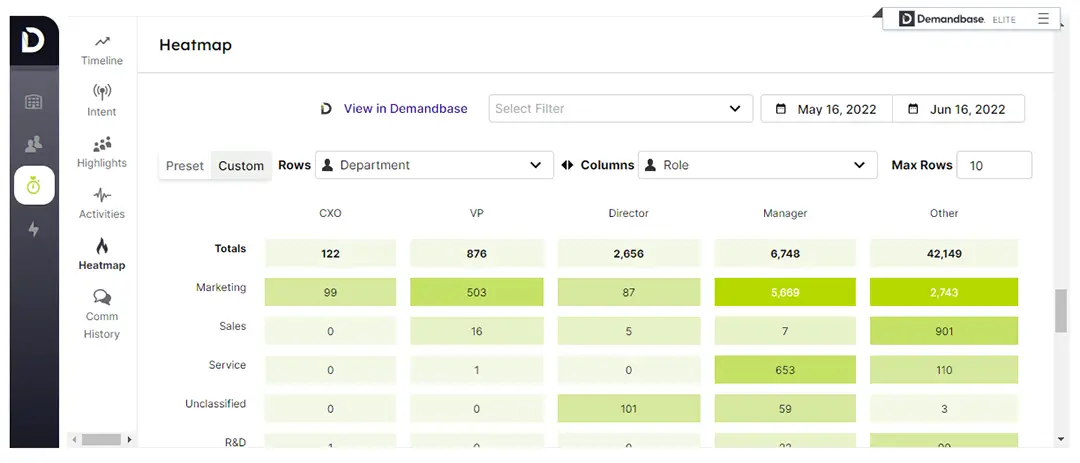
Demandbase is an ABM and revenue AI platform built for targeting and engagement across the full funnel. It mixes account identification, intent, technographics, and website engagement to help you run account-based motions. If you want a discoverorg competitor that powers ABM, Demandbase is a leader.
Top features
- Account identification and ABM orchestration
- Intent data to surface in-market accounts
- Technographics to target by stack
- Website engagement analytics and alerts
- Audience building for ads and outreach
- Sales intelligence on key accounts
- Integrations with CRMs and MAPs
- ICP modeling and fit scoring
- Playbooks and workflows for reps
- Privacy controls and governance for enterprise
Pros
It is the ultimate tool for enterprise alignment. If marketing is spending $50k on ads, Demandbase ensures sales knows exactly who is interacting with those ads so they can follow up.
Cons
It is wildly complex and very expensive. This takes months to implement properly and requires a dedicated operations person to run it.
Pricing
Demandbase uses a quote-based model. You request pricing based on your use case, account volumes, and add-ons like Advertising or Sales Intelligence.
Demandbase vs DiscoverOrg
DiscoverOrg is known for contact breadth and exports. Demandbase centers on account selection, intent, and ABM campaigns. If your strategy is account-first and marketing-led, Demandbase is a strong discoverorg alternative or companion to a contact database.
What if you want data, dialing, and emailing all under one single roof without paying enterprise prices?
10. Apollo.io

Apollo blends a large B2B contact database with outreach tools. It includes sequences, a dialer, call transcription, and analytics. Many startups choose Apollo as a discoverorg competitor because it combines AI ready B2B data and execution in one tool with a free tier.
Top features
- Sequence automation for multichannel outreach
- Buying intent filters to prioritize accounts
- Data enrichment for contacts and companies
- Dialer with call recording and transcripts
- Conversation insights and analytics
- Chrome extension for quick prospecting
- Integrations with top CRMs and tools
- List building with granular filters
- Email verification to reduce bounces
- Team reporting to track performance
Pros
The value for money is currently unmatched in the market. You are effectively getting three tools (data, sequencer, dialer) for the price of one.
Cons
Because they do everything, the data quality can sometimes suffer compared to premium, data-only vendors. You will see higher email bounce rates here than with specialized tools.
Pricing
Apollo has Free, Basic, Professional, and Custom plans. Credits control data access. Apollo’s docs note that credit charges can differ for email, mobile, or both when enriching or revealing data, which matters for dial-heavy teams.
Apollo.io vs DiscoverOrg
DiscoverOrg focuses on data depth and a large platform. Apollo is an all-in-one discoverorg competitor for smaller teams that want to prospect and outreach in the same place. If you want to start fast with sequences and a dialer, Apollo is a practical choice.
If you already have a tool like Outreach or Salesloft, you don't need Apollo. You just need a faster way to feed data into your existing sequences.
11. LeadIQ

LeadIQ helps human and AI SDRs capture and verify contact data, track sales triggers, and sync to sequences. It is a clean discoverorg competitor when you want to speed up manual prospecting tasks and keep reps inside your existing outreach tools.
Top features
- Sales trigger tracking to act on timely signals
- AI writer to personalize first lines
- Sequence sync to Outreach and others
- CRM enrichment and dedupe support
- Chrome extension for quick capture
- Team controls and governance
- List building and notes
- Basic analytics for activity and usage
- Integrations with major CRMs and SEP tools
- Compliance resources and guidance on site
Pros
SDRs love LeadIQ because it eliminates administrative friction. It stops reps from doing manual data entry, saving them hours every week.
Cons
It relies heavily on the prospect having a solid LinkedIn presence. It is a conduit for data more than a standalone proprietary database.
Pricing
LeadIQ provides a Free plan and paid tiers such as Starter, Pro, and Enterprise. Pricing is available on request and depends on seats and features.
LeadIQ vs DiscoverOrg
LeadIQ focuses on capture, enrichment, and workflow speed. DiscoverOrg emphasizes database breadth and platform add-ons. If your team wants a nimble discoverorg alternative that fits into your current sales engagement platform, LeadIQ is a good pick.
Sometimes you need to step outside of standard B2B sales and just find contact information reliably, especially for developers or recruiters.
12. RocketReach

RocketReach helps you find emails, mobile numbers, and org insights with a simple UI and developer-friendly API. Teams like it for targeted lookups, browser extensions, and rate-limit-clear plan structure. It is a straightforward discoverorg competitor for contact discovery.
Top features
- Person and company lookups with a clear API
- Org charts and company trends to map accounts
- Browser extensions for Chrome and Edge
- Bulk lookups and CSV support
- CRM enrichment through integrations
- Plan-based rate limits so teams can predict usage
- Messages with daily send limits by plan
- Team management and admin controls
- Knowledge base with plan details and limits
- Helpful support and onboarding content
Pros
It is incredibly reliable for one-off lookups and excels at finding personal email addresses, which is great for recruiting use cases.
Cons
It lacks the deep firmographics, intent data, and GTM orchestration tools that dedicated revenue teams need for complex outbound campaigns.
Pricing
RocketReach lists plan families such as Essentials, Pro, Ultimate, Enterprise, and API. The public site shows per-lookup ranges and limits, while exact pricing and add-ons may come from sales. Check the pricing and knowledge base for current plan names and limits.
RocketReach vs DiscoverOrg
DiscoverOrg is a full platform with many modules. RocketReach is more lightweight and API-friendly. If your team needs a discoverorg alternative to power targeted lookups, developer workflows, or simple org mapping, RocketReach is a clean choice.
The final tool on our list pitches itself aggressively on the promise of real-time search and daily data limits.
13. Seamless.AI
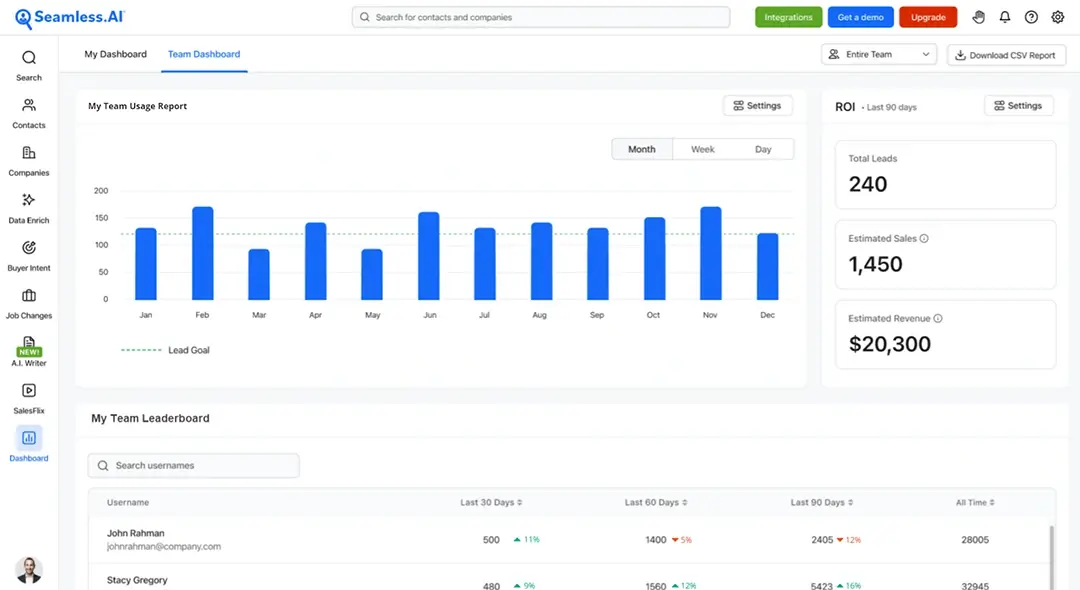
Seamless.AI focuses on real-time research at scale. It offers a free tier, a Pro plan, and enterprise options with credits and add-ons like intent data, AI assistant, and enrichment. Many outbound teams shortlist Seamless.AI as a discoverorg competitor due to the daily credit refresh model and a broad Chrome-first experience.
Top features
- Email and cell phone discovery with real-time engine
- Daily credit refresh on paid plans
- AI Assistant for copy suggestions
- Pitch Intelligence for message ideas
- Data Enrichment as an add-on
- Buyer Intent Data as an add-on
- Job Changes and Autopilot as add-ons
- Enterprise security and compliance details
- CRM integrations across major systems
- Admin tools and priority support tiers
Pros
The daily credit refresh model forces SDRs to prospect every single day, building good habits. The real-time search can sometimes find niche contacts that static databases miss.
Cons
The real-time scraping can be a double-edged sword. Sometimes it pulls accurate data; sometimes it guesses email formats incorrectly, leading to frustrating bounce rates.
Pricing
Seamless.AI has a Free plan, Pro plan, and Enterprise plan. Credits, add-ons, and integration access vary by plan. Contact sales for exact pricing and license tiers.
Seamless.AI vs DiscoverOrg
DiscoverOrg provides a wide platform with deep integrations. Seamless.AI offers a faster, credit-based approach with a strong free tier. If your SDRs want a discoverorg alternative with a simple ramp, daily credits, and optional add-ons like AI and intent, Seamless.AI is a strong option.
Conclusion
Choosing the right DiscoverOrg alternatives really comes down to acknowledging where your current outbound motion is failing.
If your reps are complaining about workflow friction, look at tools like Apollo or LeadIQ. If your legal team is holding up campaigns because of privacy concerns, you need Cognism.
But if you are simply looking for the most well-rounded upgrade—something that fixes the data accuracy issues, provides actual global coverage, and removes the headache of seat-based licensing—SMARTe is my top recommendation.
On paper, many of these tools look the same. In reality, the difference between hitting quota and missing it is the accuracy of the mobile number you just dialed. Pick the tool that actually fits your workflow, and don't let a vendor lock you into a rigid contract for data you can't use.