TL;DR:
Need someone's phone number and don't know where to start? Whether you have their name, their company, or just a mobile number to track down, one of these nine methods will get you there.
- Use a verified B2B contact database like SMARTe
- Use the SMARTe Chrome extension on LinkedIn or a company site
- Try online directories for a quick, one-off lookup
- Use people search engines like Spokeo to confirm an identity
- Search social media platforms for a listed number or a mutual connection
- Use smarter Google search formulas
- Visit the company website's contact, about, or team pages
- Ask through your network for a warm introduction
- Send a direct, respectful outreach message requesting the number
Whatever method you use, confirm consent and follow the rules that apply (TCPA, GDPR, or CCPA) before you dial or text.
Wondering how to find someone's phone number without wasting hours online?
You're not alone.
Whether you're in sales, hiring, or just trying to reach someone, tracking down a working number in 2026 still feels harder than it should. Google rarely helps. Directories go stale fast. Plenty of "free tools" lead straight to a paywall.
You do not need to guess your way through it. Below are 9 tested methods that use real, working tactics, no spammy tricks, no shady sites.
9 Proven Methods to Find Someone's Phone Numbers
1. Use a Verified B2B Contact Database Like SMARTe
Best for: Finding accurate phone numbers across companies, roles, and regions at scale.
Why it works: A verified database rechecks numbers on an ongoing basis instead of collecting them once and letting them go stale. That is the real gap between this method and a free directory.
SMARTe is a B2B contact database built around that idea. As of 2026, its coverage runs 289M+ verified B2B contacts with 75%+ US mobile coverage (current numbers here), filterable by role, seniority, industry, and technology stack so you are not scrolling through irrelevant matches.
How to use it: Get your team set up with an account, search by name or company, apply filters, then click Reveal next to a contact to get their direct number and email. The full walkthrough is below. One note up front: SMARTe is enterprise only, from $15,000 a year, with no free or self-serve signup. It is built for teams that call at volume. For a single lookup, methods 3 to 9 below cost nothing.
SMARTe Quick Start: Find a Phone Number in 6 Steps
Step 1: Get your account
Book a demo on the SMARTe site and ask for a sample match against your own target list. Your team gets access once the account is set up.
Step 2: Log in
Use your credentials to access the platform.
Step 3: Search the dashboard
Type a contact name or company into the search bar at the top. Filters sit on the right.

Step 4: Apply filters
Narrow by persona, contact or company lists, location, headcount or revenue, industry, seniority and department, technology stack, or keyword.
Step 5: Review the results
SMARTe shows matching contacts with name, job title, company, and more.
Step 6: Click Reveal
Click Reveal next to a contact to see their direct phone number and verified email.

Once you reveal a contact, add them straight to a prospecting list or a cold call list built from verified decision makers: CMOs, CEOs, CTOs, CFOs, founders, and VPs. The same search builds targeted CEO email lists and CMO email lists alongside the phone numbers.
2. Use the SMARTe Chrome Extension to Find Mobile Numbers
Best for: Pulling a verified number straight from a LinkedIn profile or company website without leaving the tab.
The SMARTe Chrome extension detects contact data on the page you are viewing and lets you reveal a phone number in one click, pulling from the same phone number database as the main platform. It works with a SMARTe account, so the same enterprise note applies.
How to use it:
- Search the Chrome Web Store for SMARTe, B2B Phone Number Finder, then click Add to Chrome.
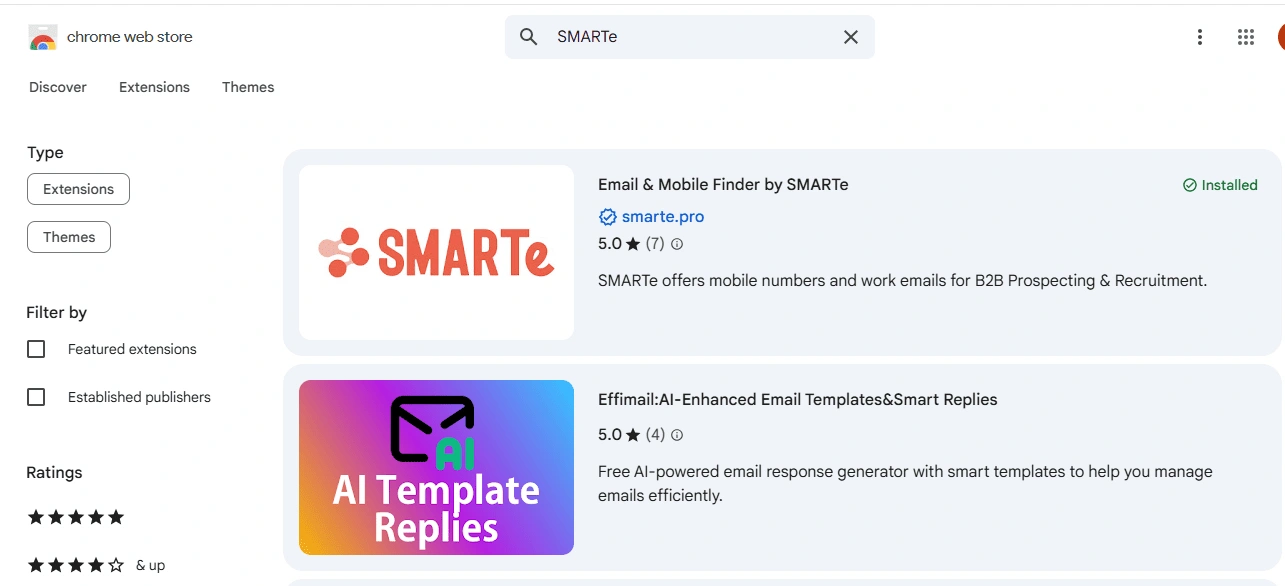
- Click the SMARTe icon and log in with your SMARTe account.
- Open a LinkedIn profile or company website. The extension auto-detects contact data on the page.
- Click the SMARTe icon again while viewing the profile to see verified details.
- Click Reveal to access the number.
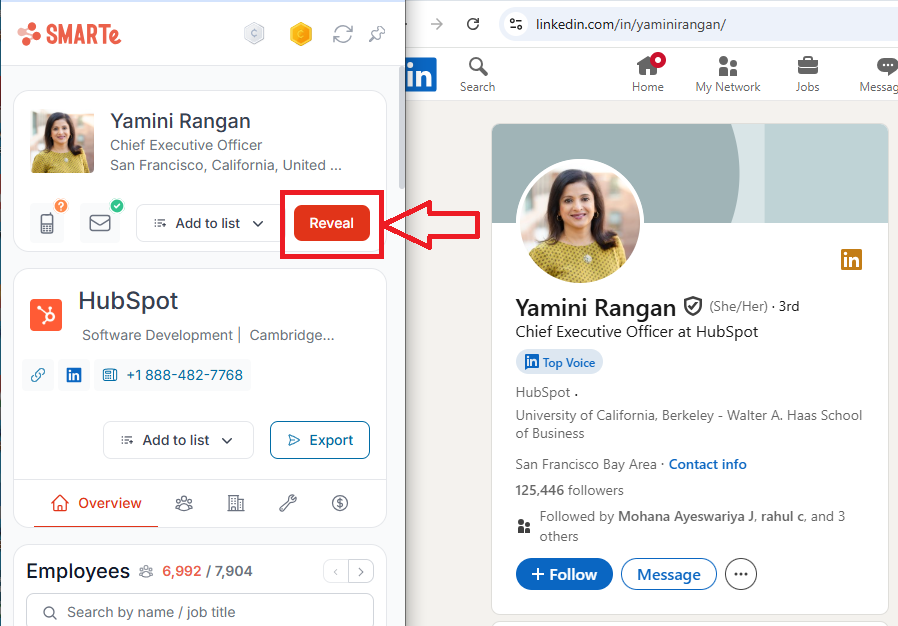
- Add the contact to a list or export it straight to your CRM.
Pair this with a LinkedIn lead generation or LinkedIn email finder workflow, and you can go from profile view to verified number in the time it takes to read the headline.
3. Try Online Directories
Best for: Quick, one-off searches for a landline or a publicly listed number.
Online directories are the digital version of the old phone book. Enter a name, city, or state, and you'll pull up basic contact details, sometimes a company name or address too.
They are not built for bulk searches or detailed filters. They rely on public records, and public records lag behind reality. A number that worked last year could already have stopped working by the time you dial it.
Use them when:
- You know the person's full name and city.
- You need a fast lookup without creating an account.
- You're researching a small business or a local lead.
Directories will not replace a dedicated sales tool, but for a quick check, they still earn a spot in your toolkit.
4. Use People Search Engines
Best for: Verifying an identity or pulling contact info from public records.
People search engines dig deeper than a directory. They cross-check court records, public filings, social profiles, and property records instead of relying on one source. Start with a name, phone number, or email, then narrow with a city, employer, or state.
Spokeo is a common example:
- Enter a name or number, plus a location or company if you have it.
- Get back a snapshot of emails, phone numbers, addresses, and social profiles.
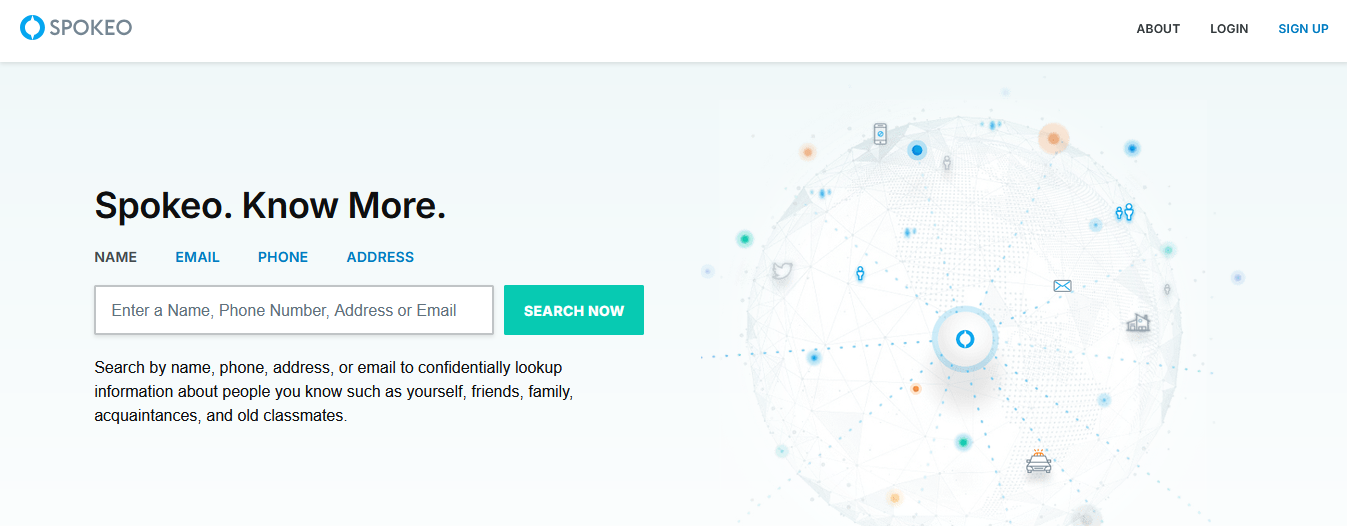
Pricing on tools like this varies and changes often. Spokeo and similar sites typically offer a low-cost trial (often under $2) that rolls into a recurring monthly plan (commonly in the $20 to $30 range) if you don't cancel in time, so check the current terms before you enter a card number.
These tools are useful when:
- You want to confirm someone's identity.
- You need to trace an unknown number.
- You're cross-checking prospect data before outreach.
For B2B prospecting, they help validate a contact fast when a standard database comes up short.
5. Search Social Media Platforms
Best for: Finding a listed number or a mutual connection who can share one.
LinkedIn sometimes shows a phone number right in a profile's Contact Info section, especially for people open to new opportunities. Even when it's not visible, a message to a shared connection can open the door faster than a cold reach-out. Facebook and X sometimes show public contact details too, especially for business owners or public figures. This is where LinkedIn prospecting earns its keep.
To try it:
- Search the person's full name and current company.
- Check their profile's contact or bio section.
- Look through shared connections for a warm introduction.
It's not guaranteed, but social media adds a human layer to a search, useful for confirming a name, spotting a title, or finding who to ask next.
6. Use Google Search to Find a Contact Number
Best for: Fast, free research when you already know how to search.
Plenty of people just type a name and hope. A sharper query surfaces cached pages, buried contact pages, and old PDFs that a plain search misses. A few formats that work:
- "[Full Name] + [Company Name] + phone number"
- "[Name] contact info site:linkedin.com"
- "[Company Name] leadership directory"
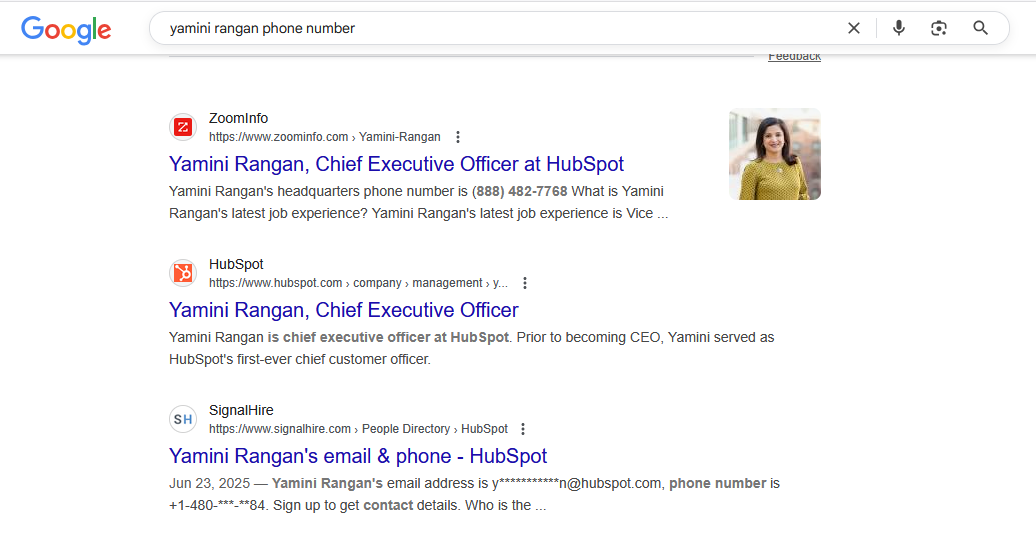
Add quotes for exact matches, or modifiers like "filetype:pdf" or "inurl:contact" to narrow the results further. This method takes patience, but it works well for public-facing teams and higher-profile contacts, since their information tends to end up online somewhere eventually.
7. Visit the Company Website
Best for: Getting an official number straight from the company itself.
Check the Contact Us, About, and Team or Leadership pages first. Smaller companies often list direct numbers or staff extensions. Larger companies may only list a department line, but that's still a starting point. Also worth checking: blog author bios, press releases, and event speaker pages. These often carry a direct contact detail or a link to a LinkedIn profile.
It's slower than a database search, but the result comes straight from the source, which makes it about as reliable as it gets.
8. Ask Through Your Network
Best for: A warm way in when public tools hit a wall.
A direct introduction beats a cold pitch more often than not. If you share a mutual connection with your target, ask for help. A short, respectful message goes a long way:
Message
Hi [Name],
I noticed you’re connected to [Prospect] at [Company].
I’d love to reach out to them about [brief reason].
Would you be open to making an intro or sharing their best contact info?
Thanks in advance!
Keep it low-pressure. This won't scale like a tool, but it gets replies, especially with people who guard their contact details closely.
9. Direct Outreach to Request a Phone Number
Best for: When you already have someone's email but not their number.
Keep the ask short, respectful, and clear about why you're reaching out.
How to do it:
- Open with a quick introduction.
- Give the reason for the call.
- Ask for their preferred contact number.
Example: "Hi [Name], I wanted to connect quickly about [reason]. If you're open to a short call, could you share the best number to reach you?"
This works well in B2B settings. It's simple, and it shows you respect their time.
Comparing All 9 Methods
| Method | Speed | Cost | Accuracy | Scale |
|---|---|---|---|---|
| Verified B2B database (SMARTe) | Fast | Paid, enterprise only | High, rechecked | High |
| Chrome extension (SMARTe) | Instant | Paid, enterprise only | High, rechecked | Medium |
| Online directories | Fast | Free/low cost | Low, often stale | Low |
| People search engines | Fast | Freemium | Medium | Low |
| Social media search | Medium | Free | Medium | Low |
| Google search | Slow | Free | Medium | Low |
| Company website | Slow | Free | High, when listed | Low |
| Network or warm intro | Medium | Free | High | Low |
| Direct outreach request | Medium | Free | High | Low |
Don’t Confuse Phone Lookup with Finding Phone Numbers
When learning how to lookup cell phone number, you will often come across tools known as phone number lookup tools.
These platforms handle situations where you already have a phone number and want to know who it belongs to. This process, a reverse phone number lookup, identifies unknown callers using online databases and public information sources.
Use cases:
- Identify an unknown or missed call.
- Confirm if a number belongs to a real person or a spam caller.
- Get basic info tied to a specific number.
If your goal is the opposite, finding someone's number based on their name, job title, or company, that's a phone number finder. These tools help sales reps, marketers, and recruiters search by filters like job title, industry, or location, reveal direct dial numbers, and build targeted call lists quickly.
A phone number finder helps you find numbers for cold calling. A reverse phone lookup tells you who owns a number you already have. Use a finder for prospecting. Use reverse lookup to verify unknown callers.
9 Tips to Find Someone's Phone Number (Ethically and Effectively)
If you're searching for cold calling, sales, or personal reasons, these tips will help you get better results, faster and safer.
1. Use a trusted phone number finder
Start with a verified B2B contact database or phone number search tool like SMARTe. These platforms offer continuously checked data, often with verified mobile numbers and email lists. Avoid unknown or outdated directories.
2. Try reverse phone lookup tools
If you already have part of the contact info, like an email or company name, use a reverse lookup tool. It can help trace a number based on available public data.
3. Be specific with search terms
When using Google or other search engines, include full name, company, job title, and location. Try phrases like "John Doe phone number" or "find number for cold calling John at XYZ Corp."
4. Combine multiple sources
No single tool gives you everything. Mix LinkedIn, Google search, company websites, and a number finder to raise your success rate.
5. Verify the phone number
Before calling, check that the number is active. This avoids dead lines and wasted effort in outreach.
6. Follow privacy and legal rules
Only use publicly available information. In the US, cold calling and texting fall under the Telephone Consumer Protection Act (TCPA), which restricts autodialed calls and texts made without consent. If your list touches the EU, GDPR sets separate rules for contacting people using their personal data, and California's CCPA adds its own layer for state residents. None of this rules out outreach. It means documenting where a contact came from and honoring an opt-out the moment you get one. The NIST Privacy Framework is a solid, plain-language starting point if you want to go deeper on data-handling practices.
7. Watch out for scams
Free phone number finders can come with pop-ups, fake surveys, or malware. Stick to platforms with clear privacy policies and a track record.
8. Use mutual contacts if possible
When available, ask a colleague, friend, or mutual connection to confirm the number. This is often more reliable than an online lookup.
9. Stay secure during searches
Don't give out your own number or personal details while searching. Only use HTTPS-secured sites and tools you trust.
Before You Call: A Quick Checklist
- Verify the number is active. A quick check saves you from a dead-line dial.
- Confirm the timezone. A good pitch still lands badly at 7am local time.
- Check consent and do-not-call status, especially for autodialed or recorded calls under TCPA.
- Know your reason for calling in one sentence, ready before they pick up.
- Have a fallback ask ready: a callback time, an email, or a referral, in case they can't talk.
Following these tips keeps your B2B lead list both compliant and effective, whether you're calling one contact or a thousand.
Why SMARTe Works for This
Every method above has a place. A directory is fine for a one-off check. A warm intro is great when you already have the relationship. But once you need active, working numbers at any real volume, the free and semi-free options above tend to hit the same wall: stale data.
SMARTe closes that gap with continuously checked direct dials and mobile numbers, filtered by role, industry, or company instead of searched one name at a time. Search, filter, reveal: that's the whole workflow, whether you're building a cold call list or prospecting a net-new account.
It is also an enterprise commitment, from $15,000 a year, with credits starting at $0.30 and no per-seat fees. If you need a handful of numbers, stick with the free methods above. If calling is a daily, team-wide job, book a demo and ask for a sample match to see the coverage on your own target list.